
The Sacred Assembly on the National Mall: What a Saturday of Prayer Teaches Everyday Believers
Published on November 1, 2026 · 12 min read
On a Saturday morning in Washington, D.C., a different kind of gathering took shape on the National Mall. It was not a rally, not a protest, and not a partisan event. It was a Sacred Assembly, a public meeting of prayer for America. Believers came from different places and walks of life to pray, sing, and read Scripture together under the open sky. For many who attended, the gathering was a quiet counterpoint to the noise of the week: a moment to step away from headlines, lower the volume, and turn the heart toward God.
The event, reported by CBN News, centered on a simple but ancient practice: calling people together to pray for the nation's well-being. In a city often associated with political debate, the Sacred Assembly on the National Mall was not about advancing a platform or a party. It was about a shared recognition that some needs are too deep for human strategy alone. The gathering reflected a longing that many ordinary believers know well, the desire to pause, to ask for wisdom, and to remember that God is still at work.
This post is not about politics. It is about the quiet lesson underneath the gathering: that a single morning of public prayer can remind every believer that the first hour of the day belongs to God. And that lesson can be carried home, into kitchens, commutes, and lock screens.
What the Sacred Assembly on the National Mall Actually Was
The Sacred Assembly was a scheduled public gathering of prayer on the National Mall in Washington, D.C. According to reports, it brought together believers for a specific purpose: to pray for America. The event did not focus on political candidates or policies; it focused on spiritual need. Organizers described it as a call to prayer, repentance, and hope. People knelt, prayed in small groups, sang hymns, and read aloud from the Bible.
Such gatherings are not new. In the Bible, a sacred assembly was a called meeting of God's people for worship, fasting, and prayer. The Book of Joel describes the call clearly: "Blow the trumpet in Zion, sanctify a fast, call a solemn assembly:" (Joel 2:15, KJV). A sacred assembly was not a vague social gathering. It was a deliberate pause, a time set apart to seek God together.
On the National Mall, the setting itself mattered. The Mall is a public space where the nation's memory is written in stone. Praying there joined the language of faith with the language of public life. For the believers present, it was a way to bring the deepest concerns of the heart out of private rooms and into shared daylight. The tone was not anger or accusation, but humility. It was a collective admission that the future does not rest solely on human planning.
A Biblical Pattern, Not a Political One
Sacred assemblies appear throughout Scripture. They were called in times of crisis, in times of repentance, and in times of celebration. The common thread was not a political agenda but a communal turning toward God. When believers gathered, they did not first ask what a candidate would do; they asked what God would do. That distinction matters today. A gathering of prayer for America can be misunderstood if it is viewed only through a political lens. But for the people present, the Sacred Assembly was a spiritual act, not a partisan one.
The Bible says, "If my people, which are called by my name, shall humble themselves, and pray, and seek my face, and turn from their wicked ways; then will I hear from heaven, and will forgive their sin, and will heal their land." (2 Chronicles 7:14, KJV). This verse is often quoted at national gatherings, but its grammar is personal: "my people", ordinary believers, not only leaders. The Sacred Assembly applied that grammar to a public lawn.
For the believer watching from home, the lesson is not "go to Washington." The lesson is "humble yourself, pray, and seek God's face", a call that fits just as well in a living room as on the National Mall.
Why a Morning of Prayer Still Feels Countercultural
For many modern believers, the morning begins with sound. A phone alarm, an inbox, a news feed, a schedule. The first minutes of the day are often surrendered to urgency before the soul has had a chance to breathe. Into that pattern, a public prayer gathering like the Sacred Assembly sends a different signal: stop, gather, pray.
Prayer is not a protest against the clock. It is a reordering of time. When believers gather on a Saturday to pray, they are saying that some things matter more than productivity. They are treating prayer as the main event, not an interruption. For the rest of us, that choice can be scaled down to a single verse before the first notification.
The attention economy profits from a distracted dawn. If the first thing a person sees is a breaking news alert, the heart may enter the day with anxiety. If the first thing is a bank balance, it may enter with fear. If the first thing is a social feed, it may enter with comparison. A verse interrupts that sequence. It does not solve every problem, but it changes the starting point.
The gathering may have lasted a few hours. But the internal shift it models can last much longer. It teaches what Jesus described in Matthew 18:20: "For where two or three are gathered together in my name, there am I in the midst of them." (KJV). God does not require a crowd. He requires a willing heart, and a crowd can be made up of two or three in a living room or ten thousand on the National Mall.
The First-Hour Problem Many Believers Face
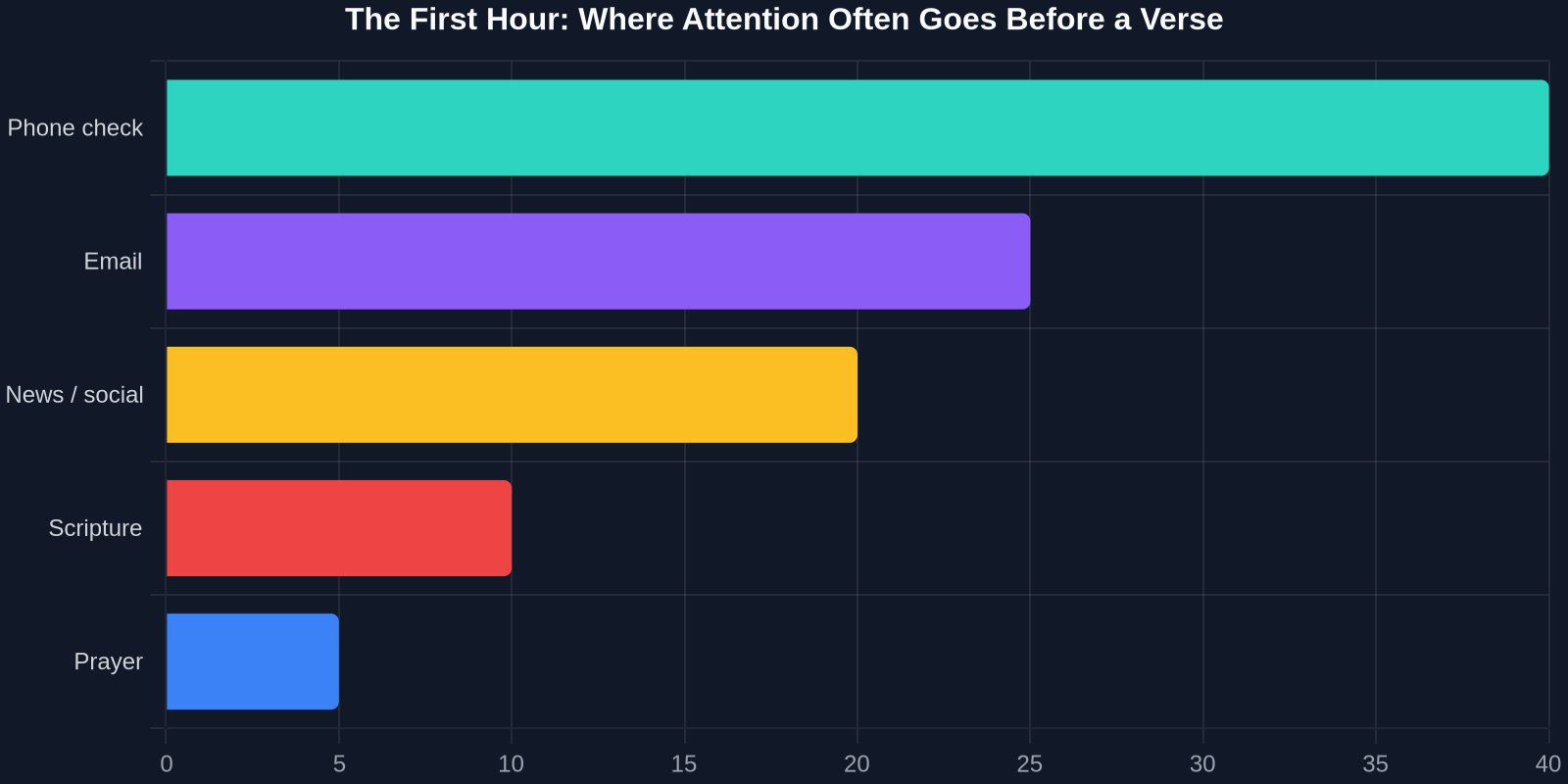
Most believers would say they want to begin the day with God. But the gap between intention and action is wide. The first hour often looks like this: reach for the phone, check email, scan news, scroll for a few minutes, then rush into the day. Scripture is left for later, if later comes. By the evening, the mind is too tired, and the pattern repeats.
This is not a moral failure. It is a design problem. The phone is engineered to capture attention. Notifications create a sense of urgency. The news cycle never sleeps. Without a deliberate interruption, the soul gets whatever time is left over.
The first hour sets the emotional temperature for the day. If it begins with a flood of other people's opinions, the believer enters the morning as a reactor rather than a person of peace. If it begins with one verse, the day may still be busy, but the soul has a different center.
One way to interrupt the pattern is to place something holy in the path of the first glance. A single verse on a lock screen is a small but real barrier between the waking mind and the digital noise. It does not replace church, prayer, or Bible study. It simply gives the first moment a different text.
Vesper offers one small way to see a daily King James Version verse on the Lock Screen, but the deeper work is simply deciding to let God speak first.
The Quiet Power of a Single Verse
A verse is not a magic charm. Its power lies in what it does to attention. When the eyes land on "Be still, and know that I am God" (Psalm 46:10, KJV), the mind is invited to pause. That pause can be only a few seconds, but it is a few seconds of stillness before the whirlwind. Over time, those small pauses accumulate into a habit of sacred attention.
The Sacred Assembly on the National Mall did with a crowd what a verse can do with a lock screen: it created a clearing. The clearing was not empty. It was filled with prayer. And a clearing can be made anywhere, on a lawn, in a car, at a kitchen table, or in the palm of a hand.
What the Sacred Assembly Teaches About Daily Faith
A large public gathering can feel far from everyday life. But the principles underneath it transfer to ordinary routines.
First, prayer turns outward. The Sacred Assembly prayed for America, not only for personal needs. That outward turn is available to every believer. A morning prayer can include the neighbor, the coworker, the local school, the community. It does not need a microphone or a stage.
Second, prayer gives a vocabulary for hope. When the news is loud, prayer speaks a different language. It does not ignore problems; it places them in God's presence. That is why many attendees left the National Mall not with a list of demands but with a quieter confidence.
Third, prayer forms a rhythm. The event was one Saturday, but the discipline it modeled, gather, pray, return to daily life, is the same rhythm the Bible describes for all believers. "Pray without ceasing" (1 Thessalonians 5:17, KJV) does not mean nonstop words; it means a life that keeps returning to God in small breaths.
"Be still, and know that I am God.", Psalm 46:10, KJV
The psalmist did not say "be busy, and prove that I am God." He said "be still." Stillness is not the absence of action; it is the presence of trust. A public gathering on the National Mall can be a form of corporate stillness, a city pausing long enough to remember who holds the city.
From the National Mall to Your Kitchen Table
Not everyone can travel to a capital city. But everyone can create a small sacred assembly at home. It may look like a family holding hands before a meal and praying for one person outside the family. It may look like a commuter sitting in the car for two minutes before turning the key. It may look like a student reading a verse before the first class. The location is not the point. The turning is.
Scripture does not prescribe a building. Jesus said, "But thou, when thou prayest, enter into thy closet, and when thou hast shut thy door, pray to thy Father which is in secret; and thy Father which seeth in secret shall reward thee openly." (Matthew 6:6, KJV). The closet and the National Mall can both be sacred assemblies, because God is not limited by square footage.
A Personal Experiment After the Gathering
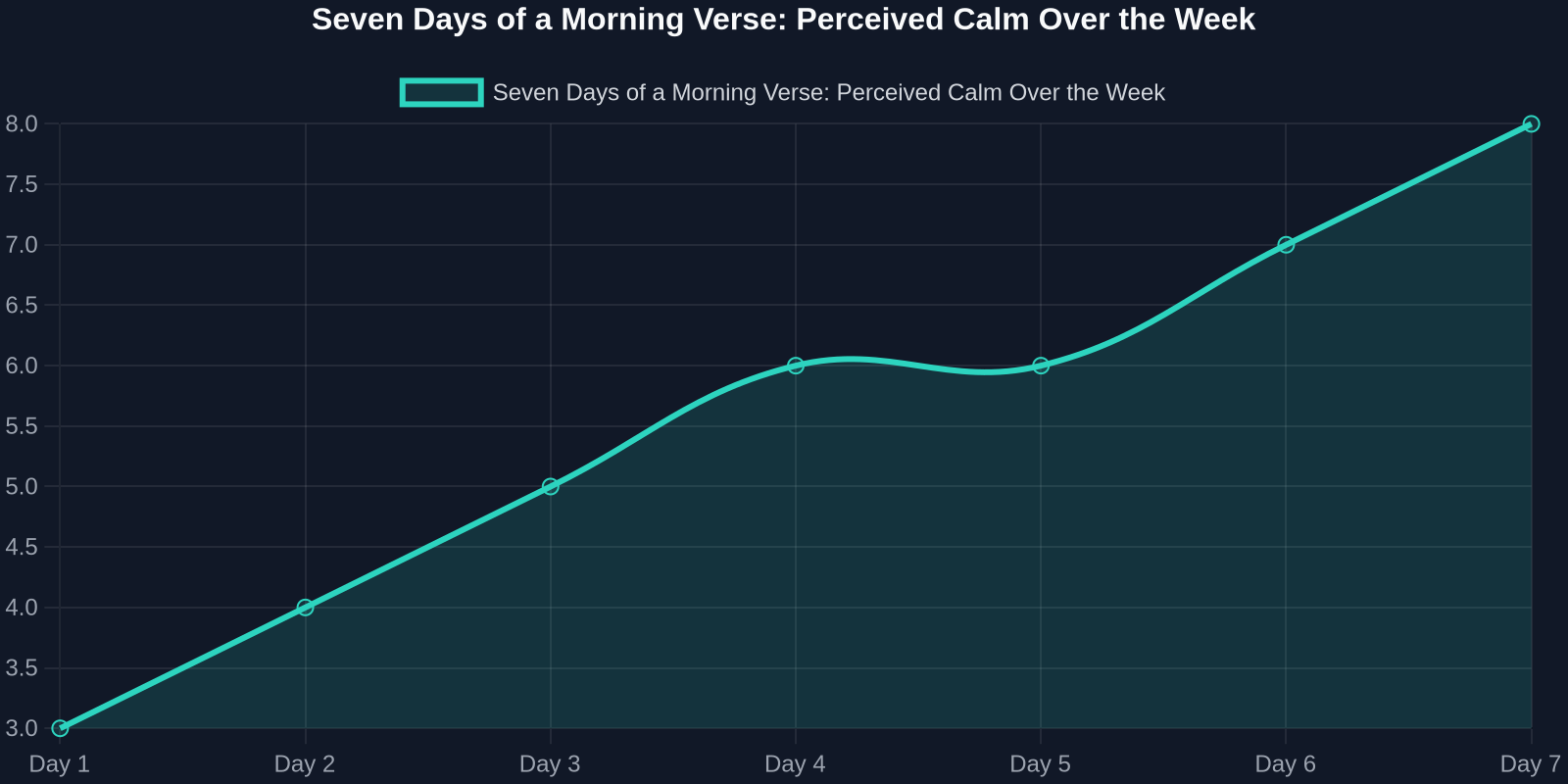
You do not need to travel to Washington, D.C., to live the lesson of the Sacred Assembly. You can create a small sacred assembly in your own first hour. Here is a simple seven-day experiment.
Start with one verse before the first app. Put a physical Bible or a Bible app on the nightstand, or place a verse on the lock screen. When the alarm sounds, read the verse once. Do not check email. Do not open the news. Let the verse be the first text.
Then offer one short sentence of prayer. It can be as simple as "Lord, be with me today" or "Thy will be done." The point is not length but direction.
Then go into the day. No pressure to journal, no guilt if the mind wanders. The only goal is to make Scripture the first word and prayer the second.
| Habit | Before | After |
|---|---|---|
| First thing in the morning | Scripture | |
| When the news feels heavy | Doomscrolling | A one-sentence prayer |
| Before bed | Replaying the day's worries | A verse and a thank you |
This comparison is not about perfection. It is about direction. The change may feel small, but small changes at the first hour tend to grow.
The Deeper Current Under the Public Event
The Sacred Assembly on the National Mall was not an end in itself. It was a signpost. It pointed to a God who invites His people to pray together, not because prayer is a technique, but because prayer is a relationship. The event may make headlines for a day, but the quieter question remains: What will ordinary believers do on Monday?
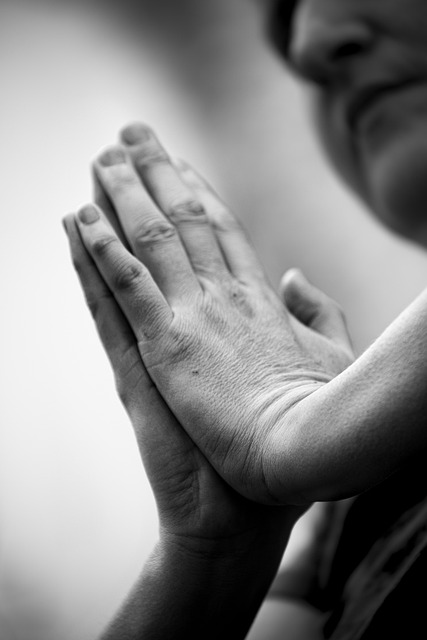
That question has no political answer. It has a practical one. The routine of the first hour can be changed. The default scroll can be interrupted. The verse can come before the voice mail. That is a different kind of assembly, one that meets every morning between the believer and the Lord.
The Bible's picture of a sacred assembly is not limited to large gatherings. In the home, a family praying before a meal is a sacred assembly. In a car, a commuter praying silently is a sacred assembly. In a classroom or office, a believer pausing to read one verse is a sacred assembly. The location changes; the essence remains.
A Closing Reflection for This Week
The news of a prayer gathering on the National Mall may fade. But the God who met those believers on that Saturday will still be present in ordinary rooms on Monday. The challenge is not to recreate a large event. The challenge is to keep a small appointment.
This week, choose one verse to carry with you. Read it in the morning. Repeat it at noon. Say it before bed. Let it become the quiet thread that runs through the day. Psalm 46:10 is a good place to begin: "Be still, and know that I am God."
If the Sacred Assembly reminds us of anything, it is that prayer has a place in public life, and an even deeper place in private life. The National Mall can hold the nation's attention for a morning. The human heart can hold a verse for a lifetime.