

How Online Content Is Quietly Shaping the Faith of a Generation (and What Parents Miss)
Published on November 21, 2026 · 15 min read

For decades, the blueprint for passing on faith looked fairly stable. It began in the home, with prayers around the dinner table and a well-thumbed family Bible. It continued in the church, with Sunday school, youth group bonfires, and a patient pastor who knew your name. The world outside those two spheres was large, but its influence was mostly filtered through real‑world relationships: friends who shared your pew, mentors who modelled what they taught.
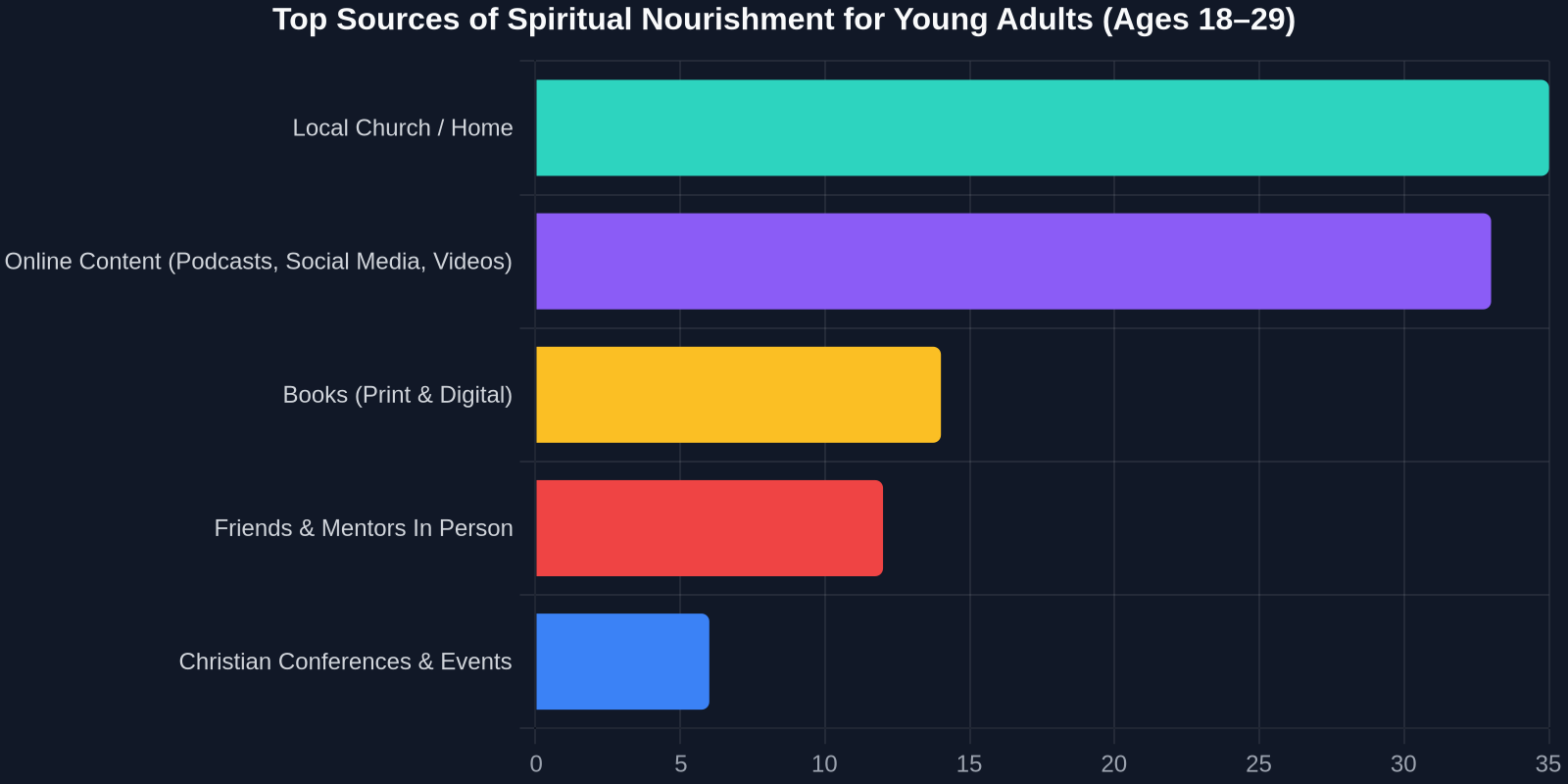
That blueprint has changed. A recent survey of young adults in the United States has added a third pillar, one that sits not in a building but on a screen. The research, reported by organizations tracking faith and culture, found that online content is now listed as a key influence on personal faith, sitting right alongside home upbringing and the local church.
The finding is not a flash-in-the-pan statistic. It is a quiet watershed. It means that the sermons a twenty‑two‑year‑old watches on YouTube at midnight, the podcast discussions she streams during her commute, the Instagram carousels he scrolls through before breakfast, and the TikTok theologian who unpacks a Greek word in ninety seconds are no longer just supplements. For a growing number, they are central pillars of spiritual formation.
This shift arrives without fanfare, yet it carries deep questions for everyday believers. What does it mean to disciple someone when the most consistent voice in their ear is an algorithm? How can parents, pastors, and mentors respond without dismissing the genuine good that online spaces offer? And in a world where content is curated by clicks, how do we learn to “prove all things” and “hold fast that which is good”?
Why the Home and Church Are No Longer the Only Pillars
The architecture of spiritual formation has always been relational. The apostle Paul wrote to Timothy, describing a faith that “dwelt first in thy grandmother Lois, and thy mother Eunice” (2 Timothy 1:5). That home‑to‑heart transmission was assumed. For centuries, the local congregation reinforced it. You learned the faith from people whose hands you could shake and whose lives you could watch up close.
Today, geography and schedule have loosened those bonds. Young adults move cities for study and work. Church attendance patterns have become less regular. Many still hold deep respect for the faith of their parents, but the daily rhythms of conversation have changed. A young nurse working night shifts may not see her family for weeks. A graduate student may find herself in a town with no congregation that shares her tradition. In these gaps, the smartphone screen offers an ever‑present voice.
The survey data puts numbers to a felt reality. When researchers asked young adults to name the top influences on their spiritual life, the answers no longer formed a neat duo. Home still mattered. Church still mattered. But so did the stream of voices coming through earbuds and screens.
None of this is inherently bad. God has always used means to reach hearts. The printing press put Scripture into ordinary hands. Radio carried Billy Graham’s voice into living rooms across continents. Today’s digital shift is another chapter in that long story. Yet because the medium is so fast, so personalized, and so unregulated, the shift demands a new kind of wisdom.
The Three Streams That Young Adults Are Tapping
To understand what online content actually means in daily life, it helps to name it. When young adults say “online content,” they are rarely talking about one thing. The research points to three broad streams that flow into their spiritual lives.

1. Teaching and Preaching On Demand
This is the most obvious stream. A young adult struggling with anxiety can search “Christian teaching on fear” and find a hundred messages in seconds. The best among them are biblically grounded, pastorally warm, and easy to share. They offer accessible entry points to Scripture that a hurried morning devotion might miss.
The gift here is real. Many young believers are exploring parts of Scripture they never heard preached locally. They are learning church history from online lectures, diving into the Psalms through guided audio series, or listening to the Book of Romans explained verse by verse during long commutes. The hunger is genuine.
The modern search for truth is not about what people say Christianity is; it is about the encounter with Christ. When a young adult streams a sermon alone in their room, they are seeking exactly that encounter, even if the setting looks different from a pew.
Yet the stream flows both ways. Alongside rich, careful teaching sits content that is shallow, sensational, or subtly skewed. An engaging speaker may open the Word but quietly skip the hard parts about sin and repentance. A message on prosperity may dress itself in Scripture while drifting far from the gospel of the cross. Because the algorithm cares about watch time, not doctrinal fidelity, the most shareable content often rises, whether or not it is the most faithful.
2. Peer Testimony and “Faith Journeys”
A second stream is the personal story. Young adults are drawn to lived experience shared through vlogs, podcast interviews, and Instagram testimonies. A woman in her late twenties talks honestly about staying celibate. A man describes how he forgave an absent father. A former skeptic recounts the moment he “came to believe.”
These stories carry power for a simple reason: they feel unfiltered. They lack the polished sheen of an official stage. For a generation skeptical of institutions, the authenticity of a peer’s testimony often lands with more weight than a pulpit announcement. Young adults do not necessarily mistrust pastors, but they deeply trust the voice that says, “I’ve been where you are.”
The apostle John knew this dynamic. “That which we have seen and heard declare we unto you,” he wrote (1 John 1:3). Personal witness is not a modern invention; it is woven into the fabric of Christian faith. What is new is the sheer volume of voices. A young adult can, in a single evening, hear testimonies from five different continents and feel she has glimpsed God’s global work. That is a gift previous generations never had.
When personal experience becomes the only lens, it can easily drift from “what God has done in me” to “what feels true to me.” The Bible must remain the anchor that tests every story.
3. Curated Spiritual Practices and Rhythms
Beyond teaching and testimony lies a quieter stream: the content that shapes daily habits. Christian meditation apps, prayer‑prompt emails, daily Bible‑verse widgets, and gentle alarm tones that start the day with a psalm are all part of this ecosystem. They function a bit like modern versions of the Word‑for‑the‑day cards grandparents tucked into bathroom mirrors, but with more polish and push notifications.
This stream matters because it touches the first minutes of the morning. Many young adults report that their phone is the first thing they reach for upon waking. What greets them on the lock screen sets a tone for the hours ahead. A verse from Proverbs seen at 7:03 a.m. can still the racing mind before the news headlines crowd in. A short prayer read in a quiet moment can re‑centre the heart on God rather than the day’s demands.
Of course, the same screen that offers a psalm can also offer a dozen other notifications. The design of the digital home is a spiritual discipline in itself. Choosing a daily verse widget like Vesper intentionally places Scripture where the eye naturally falls, on the Lock Screen and Home Screen, so that the first word is God’s Word rather than the latest alert.
Assessing What We Scroll
If online content is truly a pillar of spiritual formation, then the act of assessing it becomes a spiritual discipline. The New Testament calls this “proving,” a careful testing that does not reject what is good but refuses to swallow everything blindly. “Prove all things; hold fast that which is good” (1 Thessalonians 5:21).
But how does a twenty‑three‑year‑old with no formal theological training test a ten‑minute teaching she just watched? The task can feel overwhelming. The sheer variety of content, charismatic healing services next to Reformed expositions next to progressive re‑imaginings of Jesus, can leave a person dizzy. Without a framework, many default to “I just know what resonates.”
Resonance, however, is not the same as truth. A message can stir the emotions yet quietly drift from the gospel. The Scriptures themselves urge believers to grow beyond spiritual infancy, “that we henceforth be no more children, tossed to and fro, and carried about with every wind of doctrine” (Ephesians 4:14).
Blessed are they that hear the word of God, and keep it., Luke 11:28
Here are a handful of gentle, non‑denominational questions any believer can ask of a piece of online faith content, whether it is a podcast episode, a reel, or a live‑streamed sermon:
- Does this point me to Christ? The Holy Spirit’s prime work is to glorify Jesus (John 16:14). Good content will leave you more in love with the Saviour, not just more amazed by the speaker.
- Is Scripture handled with honesty? Are verses quoted in context, or pulled out like confetti? A teacher who respects the text will not twist it to fit a pre‑packaged message.
- What fruit is it producing in me? Galatians 5 lists love, joy, peace, patience, kindness, goodness, faithfulness, gentleness, and self‑control. Content that stirs anxiety, pride, division, or constant dissatisfaction with your local church may be feeding the wrong spirit.
- Does it align with the faith “once delivered unto the saints”? Jude 1:3 speaks of a shared deposit of truth. If a teaching claims to be the first to uncover a “new” gospel, caution is warranted.
A simple rule of thumb: consume online content like you would eat a meal, not like you would breathe air. Meals are chosen, chewed, and digested slowly. Breathing is passive and unconscious. Make your spiritual intake intentional.
What Parents and Mentors Are Missing (and Can Do)
One of the most striking parts of the recent findings is the gap between how young adults view online content and how their parents perceive it. Many parents still think of the internet as a tool, like a Christian bookstore or a radio station, that their children might occasionally use. They do not realize it has become, for some, a primary spiritual environment.

This gap is not born of carelessness. Parents who faithfully brought their children to church, prayed with them at bedtime, and modeled a life of service naturally assume those investments are the main shaping forces. They may not know that late at night, their daughter is listening to a podcast series on doubt from a speaker in Australia, or that their son’s small group discussion now takes place partly in a Discord channel.
Bridging this gap does not require surveillance or suspicion. It begins with curious, non‑judgmental conversation.
When parents ask with genuine interest, young adults often open up. Many are eager to discuss what they are learning, they simply assume no one else will understand. A father who says, “Tell me about that podcast you mentioned; I’d love to listen to an episode and talk about it,” does something powerful. He enters the digital sanctuary alongside his child, and in doing so, redeems it as another space for discipleship.
Church leaders can serve in similar ways. Some pastors have begun a practice they call “reverse mentoring,” where a young adult in the congregation meets regularly with the pastor not to be taught, but to walk the pastor through the online faith landscape they inhabit. The pastor learns what content is trending; the young adult learns to evaluate it with a shepherd’s heart.
Reclaiming the First Minutes of the Day
Beneath all the talk of sermons and podcasts lies a simpler habit that shapes the soul in hidden ways: the first thing we see each morning. For millions of people, that first thing is now a screen, and more specifically, a lock screen full of notifications.
What if, before the email subject lines and the news alerts and the social media badges, there was a moment of stillness anchored in Scripture? What if the brief glance that used to trigger anxiety instead planted a seed of peace?
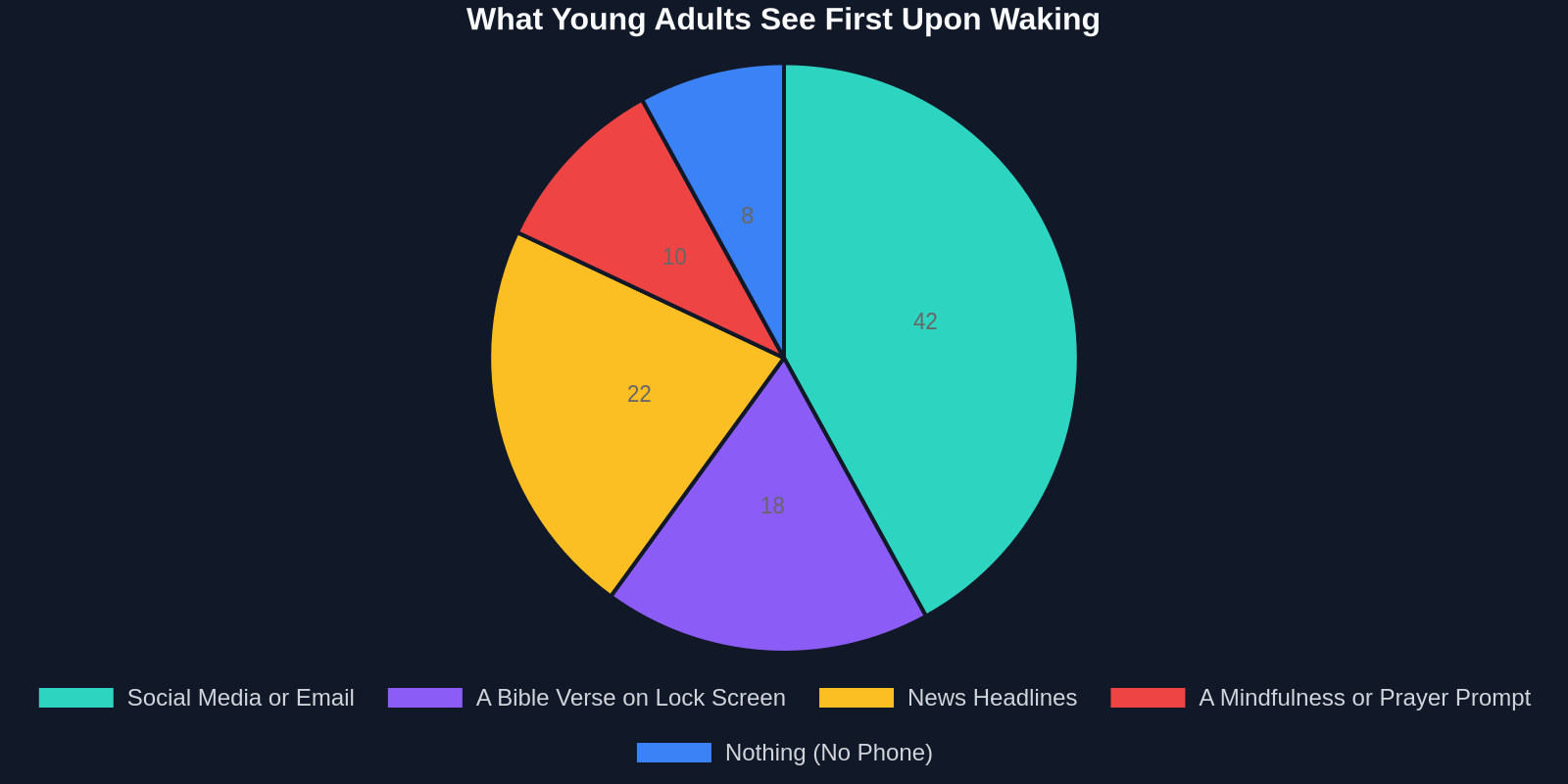
This is not about legalism. It is not a rule that must be kept to earn God’s favour. It is simply a gentle shift in the architecture of daily life, a recognition that our devices, for better or worse, function as portals to our attention. Placing a daily verse on the lock screen quietly redirects that portal toward God.
“Thy word have I hid in mine heart, that I might not sin against thee” (Psalm 119:11). The psalmist’s phrase points to an internal treasure: Scripture stored up, ready to surface in moments of temptation, sorrow, or decision. A lock‑screen verse is not a replacement for deep Bible study; it is more like a doorway. It offers a short, gentle invitation to step further in.
The practice can be especially meaningful for those in spiritually dry seasons. A person who cannot bring themselves to open the full Bible may still glance at a single verse and feel a flicker of connection. That flicker matters. God honours the smallest turning of the heart toward Him.
The Hidden Danger of Algorithm‑Shaped Discipleship
No discussion of online faith content would be complete without acknowledging the quiet danger of curation. Unlike a printed Bible or a pastor who knows your whole life, the algorithm knows only your clicks. It studies what keeps you watching and serves you more of the same.

The spiritual risk here is subtle. A young adult who watches a few sermons on grace may soon find their feed full of grace‑centred messages that never mention repentance. Another who engages with prophecy content may be funnelled toward increasingly speculative material. Neither person chose an unbalanced diet; the diet chose them.
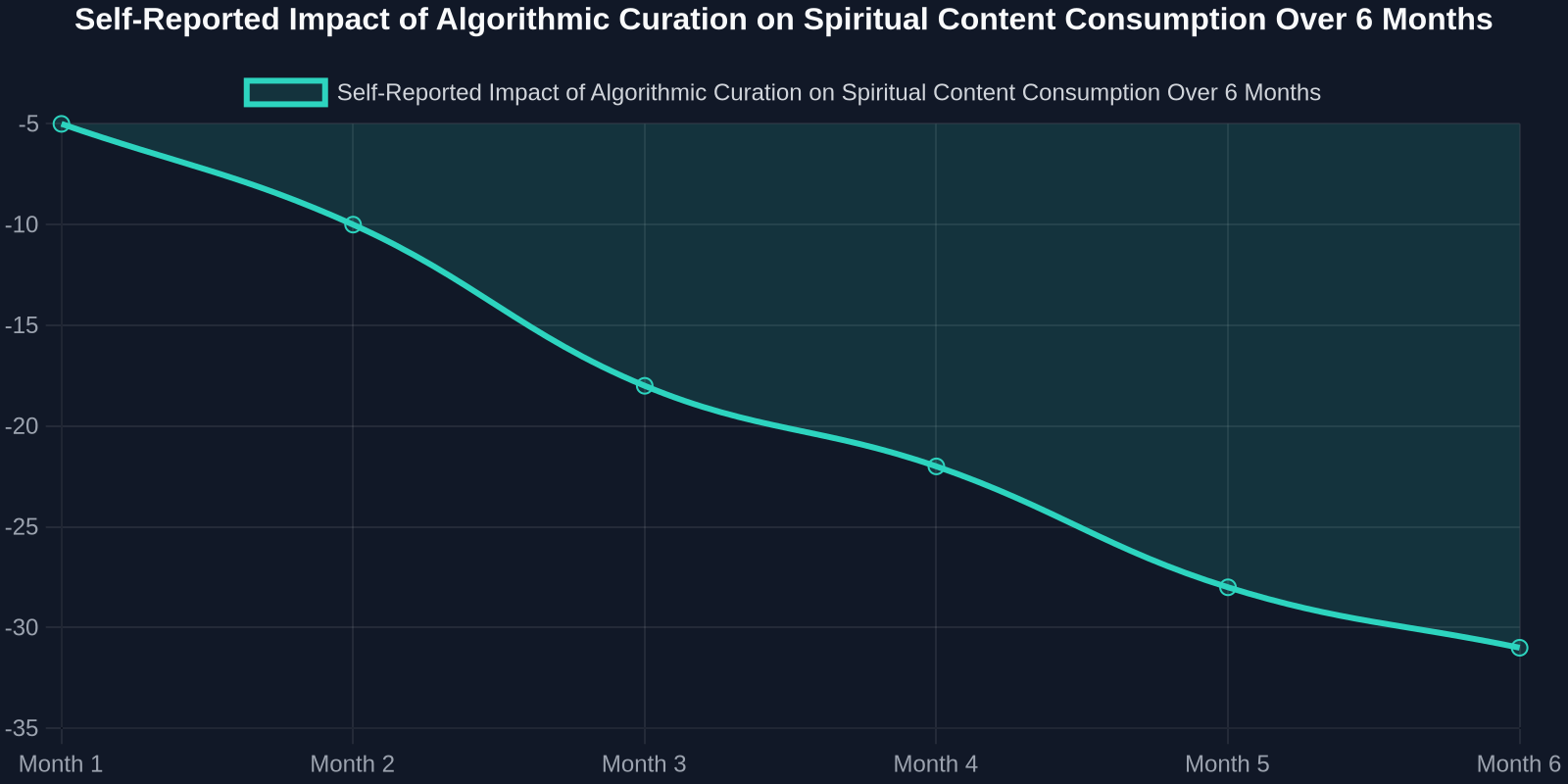
This is why the Christian virtue of discernment has become more essential, not less. In a pre‑digital age, a believer’s influences were largely bounded by geography and community. Today, the whole world streams into a pocket. The need to “try the spirits whether they are of God” (1 John 4:1) is a daily, practical task.
That statistic, drawn from related findings on spiritual formation and digital habits, reveals a hidden loneliness. Many young adults are navigating a vast ocean of content with no one to help them read the maps. They are hungry for guidance but do not know how to ask. The church’s response should not be to condemn the ocean but to provide lighthouses, trusted voices, both in person and online, who can help them steer.
Building a Faith That Holds in a Screen‑Filled World
What emerges from all of this is not a call to log off entirely. It is an invitation to purposeful engagement. The God who spoke through a burning bush and a donkey and a whirlwind can certainly speak through a podcast, a reel, and a lock‑screen verse. The question is not whether He can, but how we will discern His voice amid many others.
For the ordinary believer, a few small, sustainable shifts can make a genuine difference.
One day a week, share something you heard online with a real‑life friend. The act of speaking it aloud tests it. It invites feedback. It turns a solitary scroll into a communal conversation.
Curate intentionally. Choose a handful of trusted teachers whose lives and doctrine you can examine over time, not just in a single viral clip. Depth matters more than novelty.
Start the day with the written Word before the spoken word. A podcast is helpful; a lock‑screen verse is a door; but nothing replaces the act of opening the pages of Scripture with your own hands and eyes. Let the primary text be primary.
Invite a mentor into your digital life. It might feel awkward to say, “Here are three accounts I follow for spiritual content, would you look at them with me?” But that conversation can be life‑giving. It bridges the gap between the generation that grew up with screens and the generation that remembers life without them.
The relationship between online content and personal faith is not a problem to be solved but a reality to be stewarded. Young adults are not passive consumers; they are earnest seekers, often wading through a sea of content because they genuinely want to know God. The church’s role is not to shame that hunger but to meet it with wisdom, warmth, and the living Word that stands above every human voice.
Thy word is a lamp unto my feet, and a light unto my path., Psalm 119:105
In the end, the lamp is still the lamp. Whether it shines through a parchment scroll, a printed page, or a pixelated screen, the light is from the same Source. Our task is to walk in it, and to help each other find the path.
A Gentle Habit for This Week
If you are reading this and feeling the weight of all the noise, you are not alone. The digital world is vast, but your walk with God happens one day, one moment, one verse at a time.
This week, consider one small change: before you check anything else on your phone in the morning, read a single verse of Scripture. Let it be the first word that shapes your mind. You might write it on a sticky note, set a daily reminder, or use a simple lock‑screen verse widget that places God’s Word where your eyes naturally fall.
Such a small act, repeated day after day, becomes a quiet architecture of grace. And in a world that pulls attention in a thousand directions, returning the first glance to the One who made you is a profound and peaceful act of worship.