

Rooted in the Pews: Why Sitting with Your Family in Church Is a Quietly Missional Act
Published on November 14, 2026 · 10 min read
It happens almost without fail on a Sunday morning. The worship band finishes the last chorus, lights dim slightly, and a well-meaning volunteer with a security badge gently swings open the door to the nursery. A toddler, clutching a goldfish cracker, wanders into a room full of colorful mats while their parents slip into the back row of the sanctuary, relieved they made it on time. This scene, so normalized in our modern church programming, feels convenient. But a gentle, counter-cultural movement is asking a brave question: what if the most missional thing you could do this week is simply have your child sit next to you for the entire service?
A recent, thought-provoking essay from The Gospel Coalition challenges parents to reconsider the separation of the family unit during corporate worship. The argument isn’t a legalistic call to abolish children’s ministry, but a theological vision for physical togetherness. It suggests that when we sit together, we do more than keep an eye on our little ones, we form a tiny, visible outpost of the Kingdom. In a culture of fragmentation and algorithmic loneliness, the multi-generational family occupying a single pew is a living gospel tract.
This isn’t just a logistical debate about noise levels. It touches the very heart of discipleship. For the everyday believer, the mom who hasn’t heard a full sermon in three years due to nursery duty, the dad trying to model attention, or the grandparent longing for legacy, this practice re-frames the Sunday morning “hustle” into a holy rhythm. It answers the quiet questions of a hurried life: “How do I disciple my children on Monday when I only see them in the car?” and “How do I show my non-believing neighbor that faith isn’t a private hobby, but the organizing center of a household?”
The Witness of the Unprogrammed Moment
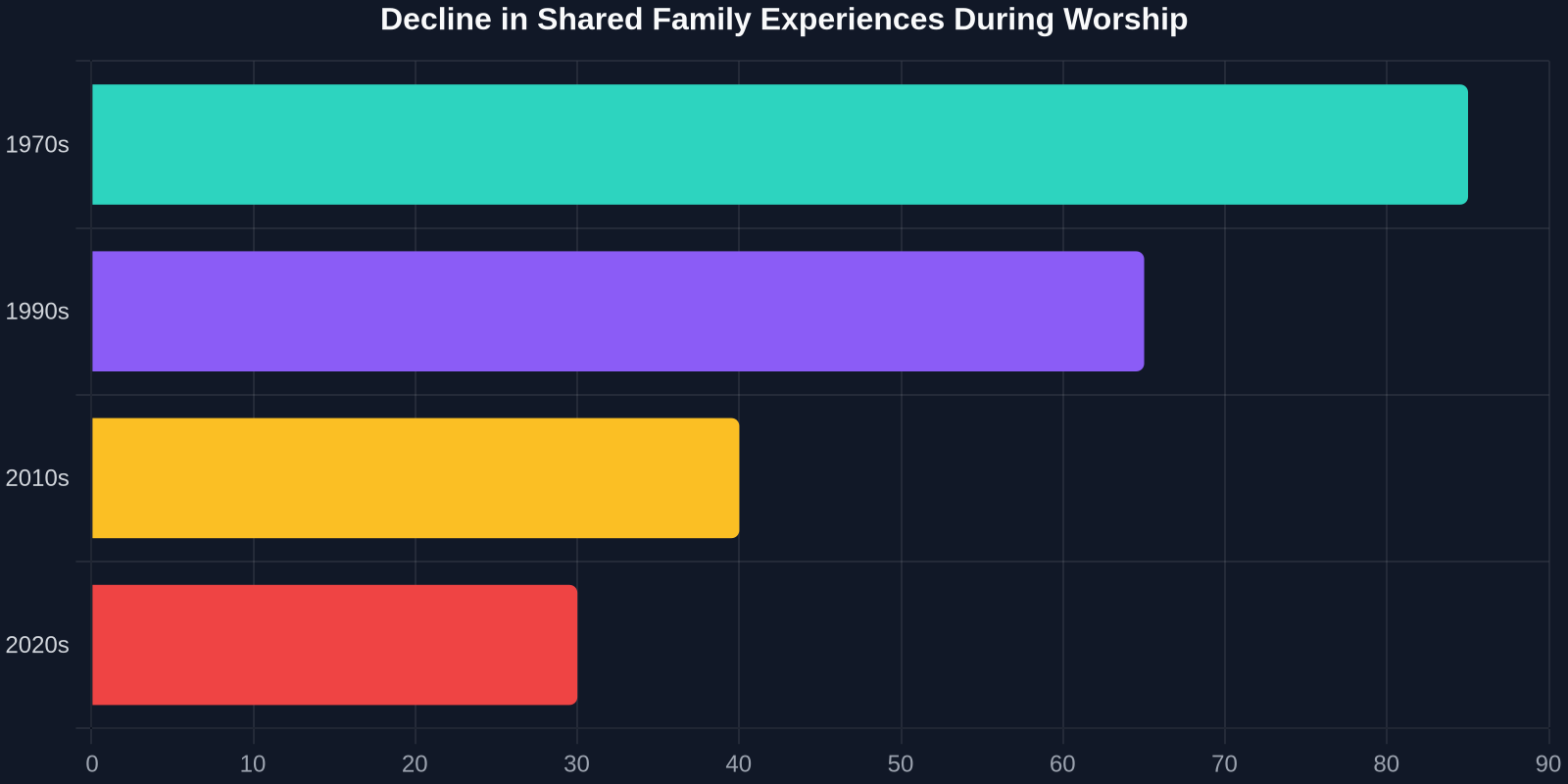
Contemporary culture specializes in dividing demographics into algorithmically perfect niches. We have “blue” TikTok, “red” podcasts, gyms for Gen Z, and social clubs for retirees. The modern church, in an effort to be relevant, often mirrors this segregation through hyper-specific, age-graded programming. While born from a sincere desire to communicate effectively, we inadvertently teach a hidden curriculum: that faith is best experienced with your chronological peers, apart from the messiness of family.
The Gospel Coalition piece powerfully posits that keeping children in the service is an act of resistance against this “age segregation” drift. When a four-year-old hears a father sing with a cracking voice, “Come Thou Fount of Every Blessing,” an unspoken transfer of value occurs. The child learns that worship isn't a performance. It is a desperate, unified plea of a tribe of misfits. They see that faith doesn’t graduate out of awkwardness. It is a lifelong, embodied posture.
Moving Beyond “Family-Friendly” to “Family-Integrated”
There is a difference between a church that programs events where families are welcome, and a church that integrates families into the core identity of the gathering. The former offers a movie night; the latter asks a child to watch a baptism and feel the water spray. It’s the difference between hearing a story about a miracle and actually watching an elder lay hands on a praying mother and weep.
When a child witnesses the unpolished, unscripted moments of church life, the prayer requests for a terminal diagnosis, the hallelujah of a financial testimony, the quiet sob of a grieving widow, their faith is forged in the fire of reality. They stop viewing church as a consumer show for moralistic inspiration and start seeing it as a family emergency room for souls. This is particularly critical for missional identity. A child who has only played VeggieTales in a basement doesn’t know how to invite a broken colleague to church twenty years later. But a child who has sat in the mess of redemption knows intuitively that the church is a place for broken people.
Mission Starts in Row 12
We often place the “missional” category out there, somewhere beyond the parking lot, in the downtown soup kitchen or the short-term trip to Central America. And while those are vital expressions of the Great Commission, they flow from the identity formed in the pew. The family unit, physically gathered, is the smallest ecclesial unit. It is the “little church” where mission is incubated.
If we want to send out missionaries who can navigate complex cross-cultural conflict, they need to first learn forgiveness and patience in a physical family. If they are to carry the aroma of Christ to their workplaces, they need to see that aroma lived out by their parents when the sermon runs long and the baby is hungry. These are the “micro-missions” of a Sunday morning. Waiting is mission. Quietness is mission. Patience when your teen rolls their eyes is mission. And this mission is public.
The Apologetic of the Bored, Fidgety Child
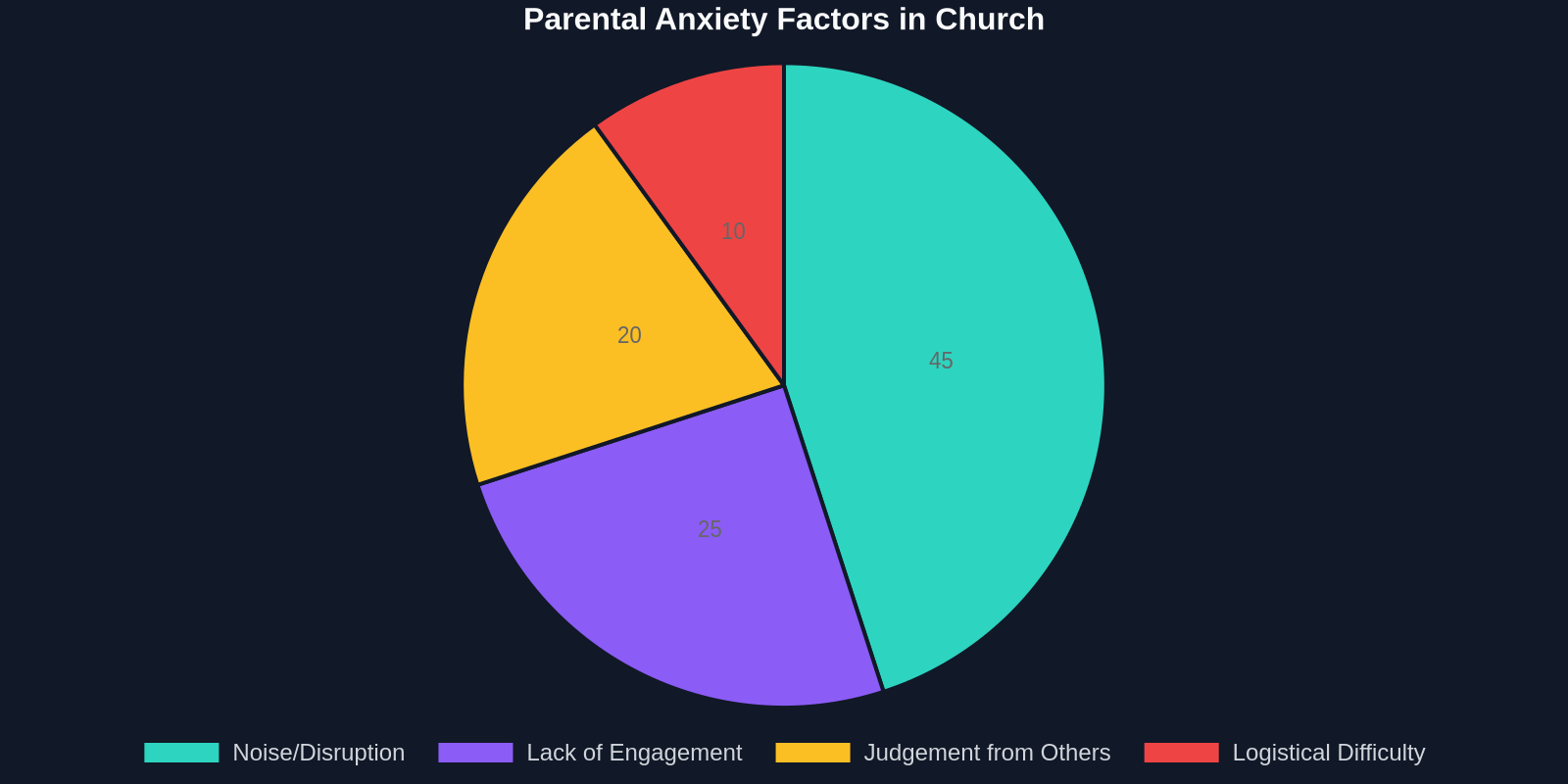
To an unchurched visitor, a flawless, professional program might be impressive, but it rarely creates holy curiosity. It creates a consumer question: “Is this worth my time?” But seeing a struggling family, a father dealing with a screaming baby while trying not to spill the communion juice, preaches a different sermon entirely. It preaches, “This messy love is worth it. This God is worth the fight.”
“Train up a child in the way he should go: and when he is old, he will not depart from it.”, Proverbs 22:6
The fidgety child is an apologetic for authenticity. In a digital world of curated Perfection, visitors are starved for reality. A family in a pew is a living tableau of the biblical narrative: a covenantal unit, flawed, distracted, but holding on together. It’s a prophetic picture of a God who didn’t outsource His presence but came to dwell in the messy flesh of a first-century household.
Practical Patterns for the “Whole Church” Home
Embracing this conviction is a beautiful ideal, but for the parent who currently sits alone while their child refuses to sit still, it can feel like an impossible hill. The transition doesn’t happen through a dramatic policy change but through small, intentional habits. As believers with full schedules who just want to start the day with God, these rhythms turn chaos into catechesis.
“Everything parents can and should provide for their children is subordinate to discipling them to be followers of Jesus,” notes one resonant voice in the broader conversation. “That’s a significant responsibility.” It is a responsibility that cannot be delegated entirely to a wonderful youth pastor for two hours a week. It requires modeling.
The Seven-Day Echo
What happens in the living room on Monday is the echo of what happened in the sanctuary on Sunday. If the Sunday experience was a split family, with parents in one room and children in another, the Monday conversation often splits too. “Mom, what did you learn in your sermon?” creates a dynamic of learned piety that rarely connects. But if the family sat through the challenging sermon about God’s sovereignty in suffering together, the car ride home becomes a spontaneous small group.
| Focus Area | Segregated Model | Family-Integrated Model |
|---|---|---|
| Discipleship Engine | Classroom curriculum | Witness of Parental Worship |
| Cultural Message | Faith is age-specific entertainment | Faith is a multi-generational covenant |
| Missional Visibility | Hidden from visitors | A public testimony of household unity |
This integration naturally flows into daily evening routines. A family that files into a pew on Sunday is more likely to file into a couch for a five-minute Bible story on Wednesday. The posture of being led by a text, of sitting under authority, is practiced. For the many Christians looking for a simple way to infuse Scripture into the mundane, this is the secret. It’s not about adding a heavy curriculum; it’s about a posture of togetherness.
When the Mess Becomes the Ministry
Let’s be honest: the romantic vision of a family sitting peacefully in a pew rarely survives contact with a two-year-old. There will be Sundays when it feels like a total failure. You will hear nothing of the sermon. You will spend 20 minutes in the hallway. You will sweat through your nice shirt before the opening hymn is over.

Yet, it is precisely in these moments of perceived failure that the deepest spiritual work is done. Your child sees you receive the grace of the doxology even when you are frustrated. Your neighbor sees you prioritize presence over perfection. The missional heart of this practice is not that your family looks impressive. It’s that your family looks dependent. And a dependent family walking into the harvest field is more powerful than a polished one.
The Quiet Revolution of the Lock Screen
For parents working to shift their family culture toward visible, integrated worship, the battle often begins with the first light of the day. If our eyes open to a barrage of news alerts and work emails, our Sunday mornings will simply be a stressed-out scramble. Shifting a family’s spiritual center means capturing the imagination before the world does. Many believers find a gentle assist here in simple technology, like the Vesper widget, which places a single King James Version verse right on the Lock Screen each day, a quiet, anchoring call to worship before the chaos begins.
The Harvest of a Quiet Pew
The harvest of sitting together, the article from The Gospel Coalition implies, is generational. It’s not a harvest reaped next quarter. It’s the 30-year return of seeing your grandchildren sing the Doxology knowing they are part of a story far bigger than their individual lives. It’s creating a church where the sound of a baby crying is met not with glares, but with a secret smile, a sound that means the church hasn't died yet.

Sunday is coming. The alarm will go off. The socks will be missing. The coffee will spill. But as you gather your little flock into that row, technology tucked away, the Word opened, you are not just attending a service. You are storming the gates of a fragmented age with a sign and a wonder: a household, side by side, waiting on God. And that sight might just be the sermon a lonely world desperately needs to see.
“As for me and my house, we will serve the LORD.”, Joshua 24:15
Begin small. Try a single Sunday. Sing loudly. Whisper help to your child during the prayer. Let them see you take notes. Let them see you repent. In a world that shows them distraction, show them a heart in worship. That is the mission field, and it starts right beside you, right now.