
Rebecca Washington’s 100th Birthday at Piedmont Baptist Church: What a Century of Faith Teaches the Rest of Us
Published on November 3, 2026 · 11 min read

Some birthdays are cake and candles. Some are a card and a phone call. And then there are the birthdays that make an entire sanctuary lean forward, the ones that mark a full century of breathing, working, praying, and showing up.
Rebecca Washington recently celebrated her 100th birthday at Piedmont Baptist Church, and 29News was there to mark the day. On its face, it is a small local story, the kind that runs between the forecast and the school board report. But a hundred years is not a small thing. A church that stops what it is doing to celebrate one of its oldest members is doing something the Scriptures have asked God’s people to do from the very beginning, and something most of us, in our hurried lives, quietly forget.
This is not really an article about a birthday. It is an article about what a hundred years of ordinary faithfulness looks like from the outside, and what it might mean for the rest of us who are still somewhere in the middle of our own counting.
A Hundred Years Is Not a Promise, It Is a Gift
One of the quiet gifts of Scripture is that it never pretends life is longer than it is. The psalmist does the math plainly:
“The days of our years are threescore years and ten; and if by reason of strength they be fourscore years, yet is their strength labour and sorrow; for it is soon cut off, and we fly away.”, Psalm 90:10 (KJV)
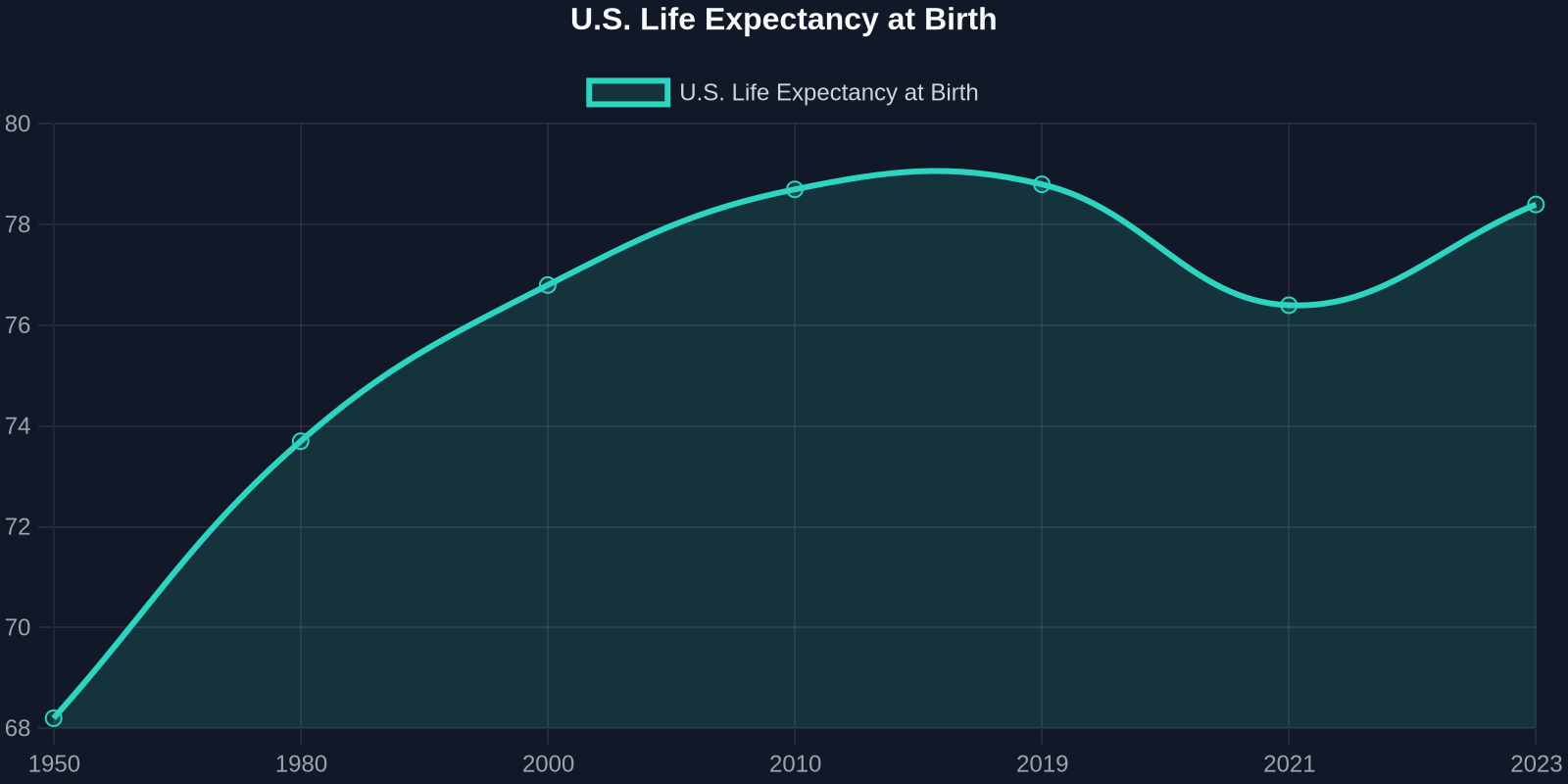
Seventy years, he says. Eighty if you are strong. That was the honest arithmetic of his day, and it is close enough to ours to still land. Which means a hundred years is not the baseline. It is the far edge of the bell curve. It is strength upon strength upon strength.
And the very next verse turns that arithmetic into a prayer: “So teach us to number our days, that we may apply our hearts unto wisdom” (Psalm 90:12, KJV). Numbering our days is not morbid. It is clarifying. It is the difference between a life that is spent and a life that is offered.
When a congregation sings “Happy Birthday” to someone turning one hundred, they are not just celebrating longevity. They are, whether they know it or not, praying Psalm 90 out loud. They are saying: we know these years are a gift, and we are not going to let this one pass unmarked.
What the Bible Actually Says About Gray Hair
We do not talk much about old age in modern Christian writing. We talk about calling, purpose, breakthrough, next steps. We talk much less about the slow, unglamorous accumulation of years.

But the Bible talks about it, and warmly.
“The hoary head is a crown of glory, if it be found in the way of righteousness.”, Proverbs 16:31 (KJV)
Note the condition. Gray hair is a crown if it is found in the way of righteousness. The years themselves do not crown anyone. It is the direction of the life that does. A hundred years spent in bitterness is still a hundred years; a hundred years spent walking with God is a crown.
“The glory of young men is their strength: and the beauty of old men is the grey head.”, Proverbs 20:29 (KJV)
That verse sits in a book obsessed with wisdom, and it makes a claim our culture finds almost embarrassing: that the beauty of a long life is a real beauty, a different kind than youth, and a church that ignores it is poorer for it.
And then there is this promise, one of the tenderest in all of Isaiah:
“And even to your old age I am he; and even to hoar hairs will I carry you: I have made, and I will bear; even I will carry, and will deliver you.”, Isaiah 46:4 (KJV)
Four verbs in a row. Made. Bear. Carry. Deliver. The God who made a person does not hand them off at some point in the middle. He carries them all the way to the end and past it.
“The hoary head is a crown of glory, if it be found in the way of righteousness.”, Proverbs 16:31 (KJV)
The Church Is the Right Room for This
There is a reason a hundredth birthday lands differently in a sanctuary than it does in a banquet hall.
A banquet hall celebrates a person’s life. A church celebrates a person’s life before God, in the company of people who have covenanted to be there for one another whether the year was good or terrible. That is a different kind of party. It is closer to worship than to entertainment.
Paul described the church as a body, and he was specific about what happens when one part of the body is honoured:
“And whether one member suffer, all the members suffer with it; or one member be honoured, all the members rejoice with it.”, 1 Corinthians 12:26 (KJV)
Rejoicing with the honoured member is not a nice extra. It is what a body does. When an 85-year-old in the third row hears the congregation stand for a 100-year-old, something is being taught that no sermon could teach as well: this is what we do here. We do not discard people when they slow down.

The Gift of Generations in One Room
One of the strangest features of modern life is how thoroughly we have separated the generations. Children spend their days almost entirely with children. Working adults spend their days almost entirely with working adults. Retirees often live in communities made up largely of other retirees. It is possible to live a full American life and go weeks without a sustained conversation with someone forty years older or younger than you.

Then you walk into a church on a Sunday morning and there they all are. A newborn being bounced in the back. A teenager scrolling before the service starts. A young mother. A widower in his eighties. A woman who has been coming to that same building for longer than most of the congregation has been alive.
The psalmist saw this and called it praise:
“One generation shall praise thy works to another, and shall declare thy mighty acts.”, Psalm 145:4 (KJV)
Faith is not transmitted by curriculum. It is transmitted by people, one generation telling another, over years, in ordinary conversation. “I remember when we prayed for that, and God did this.” “I remember the year we thought the church would close, and it didn’t.” “I remember your grandmother.” That is the transmission line, and it only works when the generations are in the same room.
“One generation shall praise thy works to another, and shall declare thy mighty acts.”, Psalm 145:4 (KJV)
Paul gave the older women in the church a specific assignment: “The aged women likewise, that they be in behaviour as becometh holiness... teachers of good things” (Titus 2:3, KJV). Notice that he did not tell them to retire from ministry. He told them to teach. The church’s oldest members are not its past; they are part of its faculty.
Faithfulness Is Built in Ordinary Sundays
Here is the thing about a hundredth birthday that we are tempted to miss: nobody gets there in one dramatic moment.
A hundred years is made of about 5,200 weeks. And a life of faith is not usually made of mountaintop experiences, it is made of a few thousand unremarkable Sunday mornings. Getting up when you did not feel like it. Sitting in the same pew. Singing a hymn you have sung so many times you no longer need the book. Listening to a sermon you only half-remember. Putting something in the offering plate. Shaking a hand at the door.
That is not glamorous. It is not the sort of thing that gets written about. But it is the sort of thing that builds a life.
Jeremiah put it this way, in a book written from the middle of ruin:
“It is of the LORD’s mercies that we are not consumed, because his compassions fail not. They are new every morning: great is thy faithfulness.”, Lamentations 3:22–23 (KJV)
New every morning. Not new every decade. The mercies of God are distributed in small daily amounts, and faithfulness, ours and His, is what accumulates when those mornings are received one at a time.
When someone reaches one hundred in the faith, it is rarely because they did something spectacular. It is almost always because they kept showing up.
What a Century Asks of the Rest of Us
The celebration is hers. The instruction is ours.

Scripture is unusually direct about how God’s people are to treat the oldest among them, not with polite distance, but with active honour:
“Thou shalt rise up before the hoary head, and honour the face of the old man, and fear thy God: I am the LORD.”, Leviticus 19:32 (KJV)
Rising up is a physical act. It costs something. It is not a warm feeling; it is a posture. And notice how the verse connects it directly to the fear of God, as though the way you treat a ninety-year-old in the hallway is a reliable measure of what you actually believe about God.
Here is the uncomfortable part: most of us are not withholding honour out of cruelty. We are withholding it out of hurry. We say hello and keep moving. We mean to ask about their week and we never do. We assume somebody else already has.
| Habit | Before | After |
|---|---|---|
| First thing in the morning | Phone in hand before feet hit the floor | One verse of Scripture before the scroll |
| Greeting the oldest member at church | A quick nod in the hallway | A real question and a real answer |
| Thinking about your own years | Occasional dread | Regular numbering, in prayer |
| Honouring elders | A good intention | A specific weekly act |
Three small things that actually help
Learn one story. Not a full oral history, just one. Ask an older member of your church: “What was the church like when you first came?” Then listen for five minutes without interrupting. You will be surprised how rarely anyone asks.
Write it down. A short note, handwritten if you can manage it, saying specifically what you have noticed about their faithfulness. Vague compliments evaporate. Specific gratitude lasts. Many people keep such notes for decades.
Pray for them by name, once a week. Not “bless all the elderly.” A name. Their aches, their loneliness, their family, their remaining years. Praying for someone weekly changes how you see them in the hallway.
Numbering Our Days Without Fear
The old Puritan prayer puts it well: teach us to number our days, that we may apply our hearts unto wisdom. Not to number them so that we panic. Not to number them so that we become morbid. But so that the days get used.
A hundredth birthday at Piedmont Baptist Church is, in the end, a very ordinary kind of miracle. It is what happens when grace meets a long series of unremarkable mornings and does not let go. It is what Isaiah promised: made, borne, carried, delivered.
And it is a reminder that the years are not the enemy. They are the field. Every Sunday you show up is a seed. Every verse you read before you look at your phone is a seed. Every older saint you honour is a seed. You will not see most of the harvest, and that is fine. Somebody else will.
If you would like a small way to begin each morning with the words of Scripture rather than the noise of everything else, Vesper puts one King James Version verse on your Lock Screen and Home Screen each day.
So this week, before the week gets away from you: find the oldest person in your church. Rise up before the hoary head. Ask them a question. Listen to the answer. And then go home and thank God that He carries His people even to their hoar hairs, and that He is not finished carrying you either.