

Is Gen Z Really Experiencing a Faith Revival? What the New Surveys Show — and Why It Matters for Daily Life
Published on October 31, 2026 · 11 min read

For more than a decade, the story told about Generation Z and faith has often been a story of departure. Young adults were leaving congregations, describing themselves as “nones,” and wondering aloud whether organized faith had a place in modern life. But in the last two years, a different headline has begun to circulate: that a revival is quietly taking root among Gen Z, especially among young men. Two new surveys offer surprising evidence that Christian leaders who believe revival is taking root among Gen Z have fresh support from two major sets of data showing a shift in spiritual openness. At the same time, some media reports have suggested there may be a religious revival taking place among young adults, especially young men, in the U.S. But recent polls paint a more careful picture: interest is real, but it is not the same as daily practice. For everyday Christians watching this conversation unfold, the question is not simply whether Gen Z is returning to faith. The question is what daily habits can turn a moment of spiritual curiosity into a life shaped by Scripture.
This post looks at the new surveys, the pressures shaping young adult life, and one small practice that can help any believer, Gen Z or otherwise, begin the day with God rather than the noise of the world.
The Headlines Say Revival. The Data Says Something More Nuanced
The revival conversation did not begin in a vacuum. It began, in part, with anecdotal reports: crowded college ministry gatherings, baptisms on university campuses, young men showing up at Bible studies in numbers that surprised longtime pastors. Christian leaders who have prayed for years for a move of God among the next generation saw these stories as early signs of something larger. The new surveys lend some support to that hope. They suggest that the spiritual temperature among young adults is not as cold as the old narrative assumed. But they also reveal a more complex reality: Gen Z is not marching back to institutional faith in lockstep. Instead, many are exploring spirituality through relationships, digital communities, and personal practices rather than through traditional structures.
A key reason for this complexity is the way information reaches young adults in the first place. In a survey this year by the Media Insight Project, 63% of 18-to-34-year-olds said they get news from influencers “at least sometimes.”
This matters for the faith conversation because spiritual curiosity is often sparked in the same digital spaces where news, culture, and identity are discussed. A young adult may hear a testimony from a podcaster, watch a short video of a worship gathering, or read a post about finding peace in Scripture. The door opens. But the same feed also delivers financial stress, polarized arguments, and a constant invitation to compare one’s life with everyone else’s. The result is a generation that is listening, but also distracted.
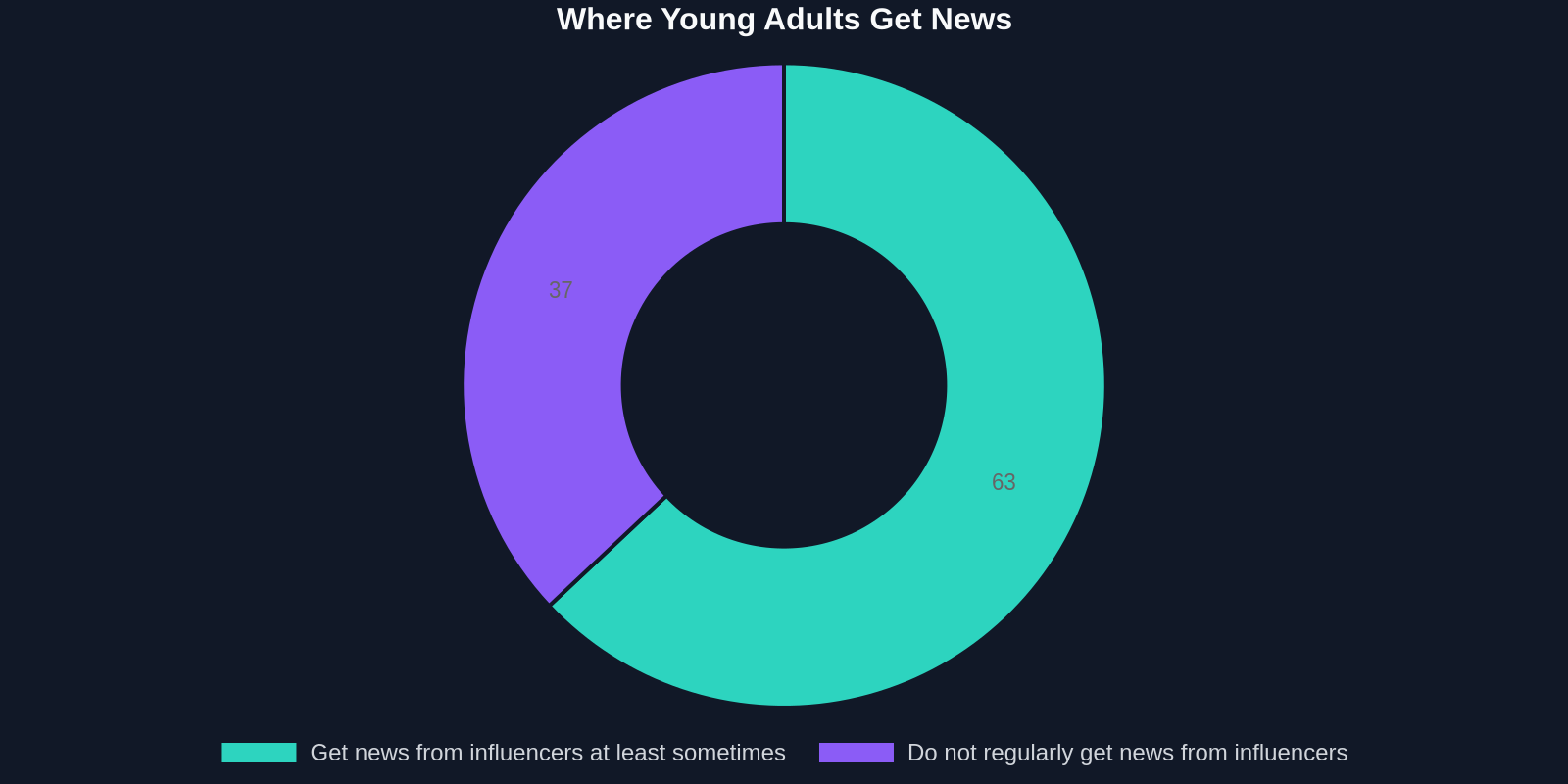
The chart above shows how common influencer-based news consumption has become among young adults. It is not a moral failure; it is simply the reality of the media environment. For Christian leaders and for ordinary believers, it means that the first moment of spiritual awakening often happens in a scrolling feed, not in a church lobby. That is not something to fear. It is something to meet with gentleness and a clear next step.
Why Gen Z Is Searching, and What They Are Up Against
Revival talk is not happening in a vacuum. It is happening while many young adults carry financial burdens that previous generations did not face at the same age. Generation Z is entering adulthood with more financial burdens than any previous generation, according to a new survey. Deloitte’s 2025 Gen Z and Millennial Survey found that younger workers place a strong emphasis on work-life balance, financial security, and mental health. The pressures are not abstract. In 2023, 2025, and 2026, researchers asked respondents whether they were experiencing “serious financial problems” due to price increases. In July 2023, 27% answered yes.

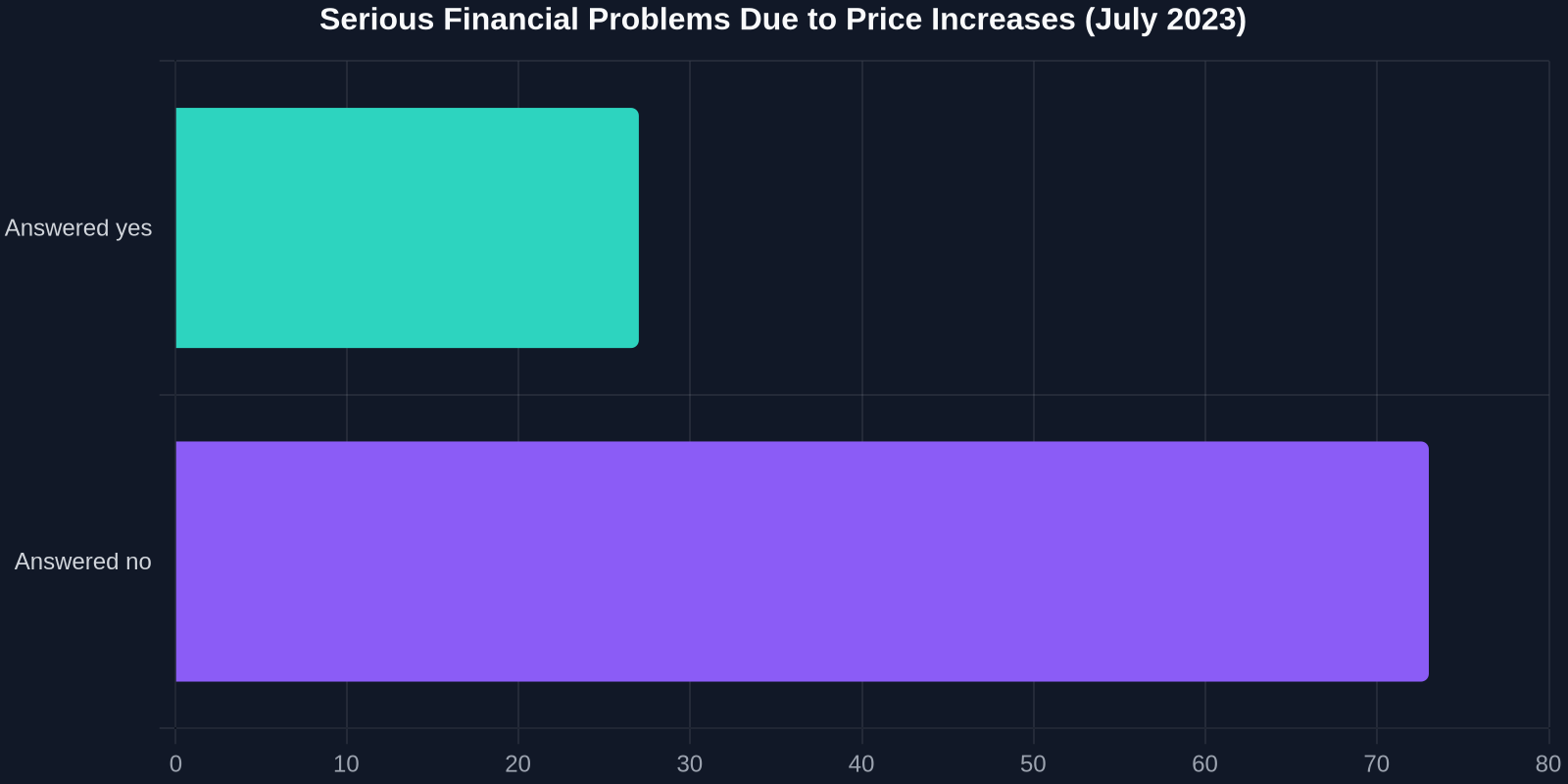
This financial strain matters for spiritual life because anxiety has a way of filling the mental space that prayer and Scripture reading require. A young adult who is worried about rent, student loans, or the cost of groceries may want to begin the day with God. But the morning often begins with a bank notification, a news alert, or a to-do list. The desire for peace is real; the habit of reaching for it is often missing. In the Old Testament, the prophet Jeremiah wrote words that speak directly to this daily anxiety: “It is of the Lord's mercies that we are not consumed, because his compassions fail not. They are new every morning: great is thy faithfulness.” (Lamentations 3:22-23, KJV). The promise is not that all financial pressure will disappear. It is that mercy is renewed every morning, and that a person can return to that mercy day after day.
The Quiet Power of a Single Verse
The surveys about Gen Z and faith often focus on large categories: belief, belonging, and behavior. But ordinary Christians know that faith is lived in much smaller units. It is lived in the ninety seconds before the first email is opened. It is lived in the pause between a stressful headline and a prayer. It is lived in the decision to reach for a verse instead of a scroll.
The King James Version of Psalm 119 offers a picture of this small, steady practice: “Thy word is a lamp unto my feet, and a light unto my path.” (Psalm 119:105, KJV). A lamp for the feet does not illuminate the entire road at once. It reveals the next step. That is what a daily verse can do for a generation, and for any believer, facing a future that feels uncertain.
Thy word is a lamp unto my feet, and a light unto my path., Psalm 119:105, KJV
Too often, faith is presented as either a massive transformation or a Sunday-only obligation. Both miss the quiet power of a single verse. A verse can be memorized while commuting. A verse can be written on a sticky note and placed on a bathroom mirror. A verse can appear on a lock screen before a single notification grabs attention. None of these is a revival by itself. But together they form the architecture of a daily walk with God.
The book of Isaiah extends the promise: “But they that wait upon the Lord shall renew their strength; they shall mount up with wings as eagles; they shall run, and not be weary; and they shall walk, and not faint.” (Isaiah 40:31, KJV). Waiting on the Lord is not passive. It is a daily return to His Word, a quiet act of trust that precedes every other task.
From Spiritual Curiosity to a Daily Habit
The gap between spiritual curiosity and daily practice is not unique to Gen Z. It is a human pattern. Many people feel moved by a sermon, a song, or a conversation, and then find that the feeling fades by Tuesday afternoon. The question is not whether the feeling was real. The question is whether a simple, repeatable practice can carry the person from the moment of awakening to the ordinary days that follow.

The New Testament does not promise that every morning will begin with spiritual fireworks. It promises that those who seek God will find Him. Jesus said, “But seek ye first the kingdom of God, and his righteousness; and all these things shall be added unto you.” (Matthew 6:33, KJV). The word “seek” is not a one-time event. It is a repeated action. The same word is used for searching, pursuing, and returning. A daily verse is one practical way to seek first the kingdom before seeking email, news, or social media.
This is where a small change in the morning routine can make a surprisingly large difference. The table below compares a common pattern with a Scripture-first alternative.
| Habit | Before | After |
|---|---|---|
| First thing in the morning | Checking email or social media | Reading one KJV verse |
| Midday pause | Scrolling through headlines | Reciting a verse from memory |
| Evening wind-down | Replaying the day's stress | Praying through a verse |
| Weekly rhythm | Sunday-only faith | Daily small habits |
The table is not a judgment on anyone’s morning. It is a map of a possible shift. The goal is not to add another task to an already full schedule. The goal is to replace a source of noise with a source of peace. For many believers, the simplest way to do that is to put a Bible verse where the noise already lives, on the phone screen.
A morning rhythm in three simple movements
A daily verse habit does not require a seminary degree or an hour of quiet. It can begin with three small movements: read, remember, and return. First, read the verse before touching email or social media. Second, write it down or speak it aloud so it moves from the screen into memory. Third, return to it at noon or in the evening with a simple prayer, “Lord, let this word shape my day.” None of these actions is impressive. Together they are transformative.
The book of Proverbs gives a fitting frame: “Trust in the Lord with all thine heart; and lean not unto thine own understanding. In all thy ways acknowledge him, and he shall direct thy paths.” (Proverbs 3:5-6, KJV). A morning verse is a small act of acknowledgment. It says to God, before any other voice speaks, “I want Your direction today.”
What Gen Z Values, and What It Might Mean for Faith
One of the more interesting findings in recent surveys about young adults is the value placed on freshness and authenticity. In one survey, more teens said they would cast new actors (39.8%) over known actors (38.2%), and just 16.8% would cast an influencer.
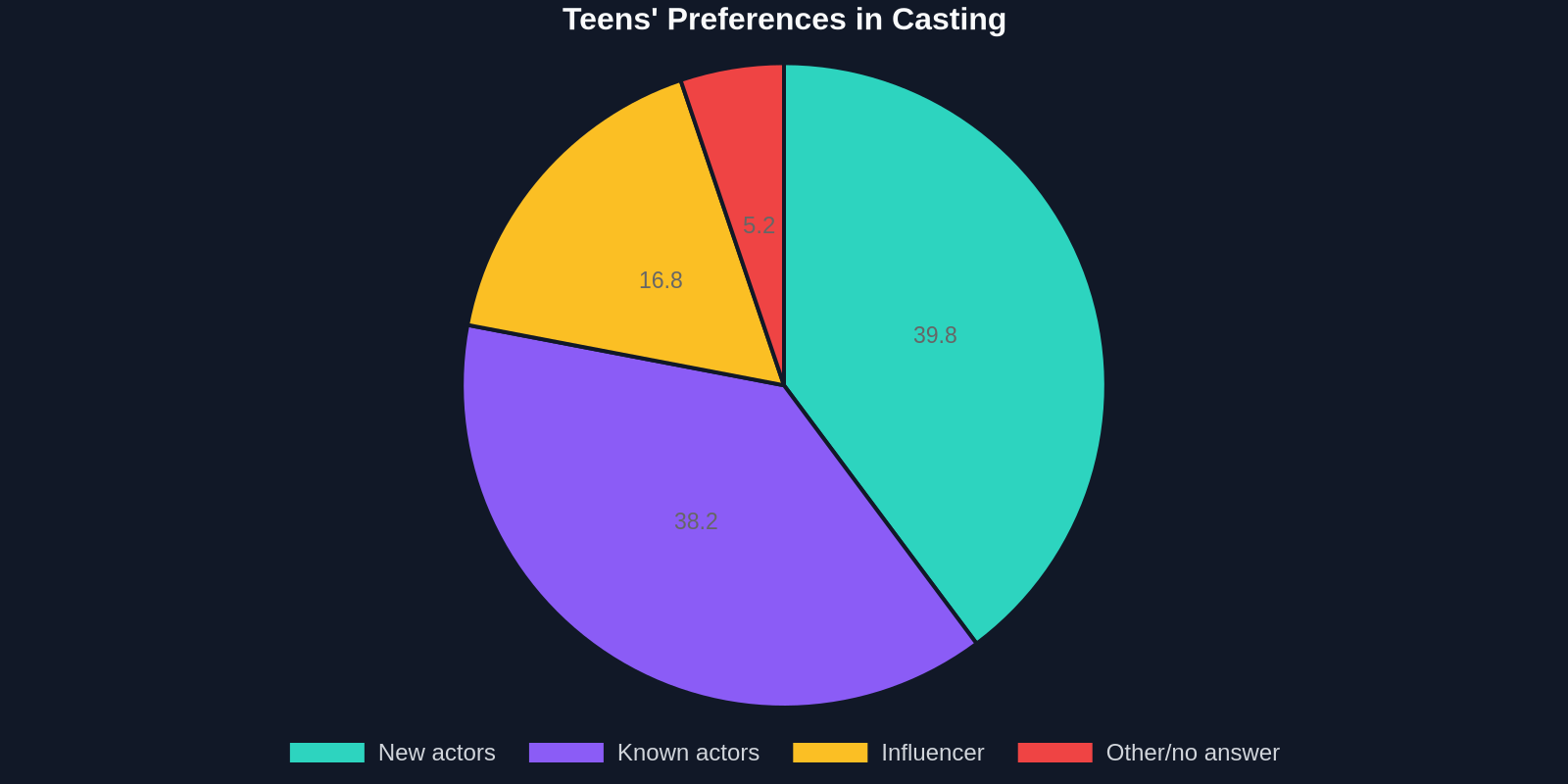
This preference for new voices and authentic presence has implications for spiritual life. Young adults are not necessarily looking for celebrity faith. They are looking for something that feels real and close. The King James Version, with its cadence and weight, can feel ancient and authoritative in a culture of constant novelty. That is precisely its strength. It offers a voice that does not change with the news cycle. A generation surrounded by shifting opinions may find rest in words that have held steady for centuries.
The same desire for authenticity also surfaces in how young adults approach community. Young adults are turning to recreational sports, run clubs and organized races, including DJ Diplo's 5K race, to find connection without needing alcohol. The longing is not for escape but for belonging that does not demand performance. In a similar way, a daily Scripture habit can become a quiet form of belonging: a moment of connection with God that does not depend on mood, trend, or social approval.
A Week of Small Beginnings
None of this requires a dramatic overhaul. The surveys do not call for a program. They call for attention. A person who is spiritually hungry can begin with a single verse and a single week. The practice is simple: decide that the first glance of the morning will be a verse, not an inbox. Write the verse somewhere visible. Say it quietly before getting out of bed. Let it set the tone for the day.

For readers who want a simple way to see a daily KJV verse on the Lock Screen, Vesper offers exactly that, one verse each day, placed where the day begins. The app does not replace prayer, scripture study, or the local church. It simply removes one small barrier: the effort of deciding what to read. And in a week that already feels heavy, removing even one small barrier can be a gift.
What the Surveys Ultimately Show
The revival conversation will continue. Some will point to the surveys and see evidence that God is moving among Gen Z. Others will point to the same surveys and see a more complicated story. Both can be true. What matters for the everyday believer is not the final verdict on a generation. What matters is the small, daily choice to seek God first. Jesus did not say, “Analyze the revival.” He said, “Seek ye first the kingdom of God.” The kingdom is found in the next step, not in the headline.
Gen Z is not simply leaving faith behind; many are quietly searching for a faith that holds up under pressure. The next step is not a trend, it is a daily verse.
For the Christian reader, the invitation this week is small. Choose one verse. Read it before the first email. Write it on a note. Say it in the car. Watch what happens when the first thought of the day belongs to God instead of the world. The data may be complicated, but the practice is not. It is as old as Scripture and as close as the lock screen.