
Benedictine Nuns Face a $1 Million Deadline to Preserve 800 Years of Prayer
Published on October 30, 2026 · 10 min read

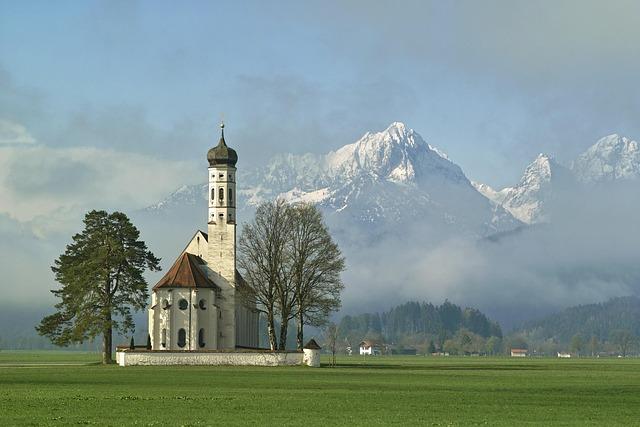
In the rolling hills of southern Poland, an 800-year-old abbey has carried a quiet and remarkable witness through every change the modern world could throw at it. For eight centuries, a community of Benedictine nuns has kept the prayers going, through political upheaval, economic hardship, and the ordinary wear of time. Now the community faces a different kind of challenge, one that does not come with banners or armies but with a pressing financial deadline. The nuns have launched an urgent appeal to raise $1 million to complete a heritage preservation project at their ancient home.
The story, reported by Our Sunday Visitor, is not simply about an old building in need of repair. It is about what it means to keep a promise across generations. The Benedictine way of life is built on stability, daily prayer, and steady work. When a community stays in one place for 800 years, the place itself becomes a kind of living prayer. The walls, the chapel, the library, the archive, and the quiet rooms where nuns have prayed before dawn all hold the weight of that history. Preserving them is not a luxury; it is a way of honoring the hands that built and kept the abbey long before the current sisters were born.
A Living Heritage Eight Centuries in the Making
It is difficult to grasp what 800 years means in human terms. When the abbey was founded, the printing press had not yet been invented in Europe. The Americas were not on European maps. The great cathedrals of the Middle Ages were still rising. Yet through all of that change, the community continued to gather for prayer, to work the land, to offer hospitality, and to mark the hours of each day with Scripture.
The psalmist wrote, “Be still, and know that I am God” (Psalm 46:10, KJV). That call to stillness has been at the heart of monastic life for centuries. In a world that constantly speeds up, a place where people deliberately slow down becomes more valuable, not less. The abbey in southern Poland is one of those places. It does not exist to be noticed; it exists to be faithful. And that faithfulness has a physical footprint, a roof, a foundation, windows, wooden beams, and stone walls that need careful restoration after centuries of service.
The appeal for $1 million may sound like a large number, but for an 800-year-old structure, it is also a realistic one. Heritage preservation is slow, detailed work. Old masonry must be repaired with compatible materials. Wood must be treated, roofs replaced, archives stabilized, and sacred art conserved. Each step requires specialists who understand historic buildings. When the work is done well, it can last for another century or more. When it is neglected, the damage compounds quickly.
Why the $1 Million Deadline Matters
Deadlines have a way of focusing attention. The nuns are not asking for support because they have stopped working or because they have failed to plan. They are asking because the scale of the need now exceeds what a small community can manage on its own. Eight hundred years of continuous use leaves its mark. The abbey has sheltered the community through harsh winters and long summers, through times of plenty and times of scarcity. Now the building itself needs care.
The $1 million goal is not an abstract figure. It represents a specific preservation project with a clear scope and a fixed deadline. For the nuns, meeting that deadline means the difference between restoring the abbey while it is still stable and facing more expensive emergency repairs later. It also means being able to continue the community's daily rhythm without the constant worry of a failing roof or a leaking wall.

For readers outside Poland, the appeal can feel distant. But the need is not just about one abbey. Across Europe and beyond, historic religious communities are facing similar challenges. Young people are less likely to enter monastic life in large numbers. Rural populations have shifted. Tourism and local support have changed. Communities that once had large families to draw from now have fewer members and heavier maintenance burdens. When one of these treasures is lost, the loss is not only architectural; it is spiritual and cultural.
The Daily Rhythm That Sustained 800 Years
What kept the prayers going for 800 years was not drama or spectacle. It was rhythm. Benedictine life is structured around the hours of prayer, often called the Divine Office. In the early morning, the community gathers. At midday, they gather again. In the evening, the day closes with prayer. Between those times, there is work, cooking, cleaning, tending the garden, welcoming guests, preserving the abbey's records, and caring for one another.
The King James Version describes this kind of unceasing prayer in blunt terms: “Pray without ceasing” (1 Thessalonians 5:17, KJV). That does not mean every moment is spent kneeling in a chapel. It means that the whole day is oriented toward God. The work becomes prayer. The meals become prayer. The silence becomes prayer. The community has practiced this orientation for eight centuries, and it is one reason the abbey has survived when so many other institutions have disappeared.
Pray without ceasing., 1 Thessalonians 5:17, KJV
The prayer rhythm is not hidden away. It spills into the local community. Neighbors know the bells, the times of day, the quiet presence of the sisters. The abbey has been a place where people can come for a moment of peace, for counsel, or simply to sit in a space that has been soaked in prayer. That kind of witness cannot be measured, but it is real.
Preserving More Than Stone and Mortar
When people hear about a $1 million preservation project, they may imagine scaffolding, architects, and careful restoration. Those things are part of it. But the deeper work is preserving a living connection to the past. The abbey's archive, for example, may hold records that tell the story not only of the community but of the surrounding region, its agriculture, its weather, its people, its faith. If those records are lost to damp or neglect, a whole library of memory disappears.

The same is true of the building itself. Old churches and monasteries carry the fingerprints of the people who built them. Stonecutters left marks. Artists painted symbols. Generations of nuns walked the same corridors, sang the same psalms, and knelt on the same floors. Restoring those surfaces is not about making them look new; it is about keeping them intact so that future visitors can sense the weight of that history.
The Psalmist asks, “Except the LORD build the house, they labour in vain that build it” (Psalm 127:1, KJV). The verse reminds us that human effort alone is not enough. The nuns know this. They have prayed through times when the future looked uncertain. They have prayed through wars, famines, and political changes. Their appeal for help is not a sign of despair; it is an act of hope. They believe the prayers will continue, and they are asking others to help make that possible.
Except the LORD build the house, they labour in vain that build it., Psalm 127:1, KJV
What This Means for Ordinary Believers
Most people reading this will never live in a monastery. Few will ever face the task of preserving an 800-year-old abbey. But the story still speaks to ordinary believers. It is a reminder that faithfulness is often quiet and unglamorous. The nuns did not make headlines for 800 years. They simply kept showing up. They kept praying. They kept mending what was broken and caring for what had been handed to them. That is a powerful model for anyone trying to live a life of faith in the middle of a busy schedule.
It is also a reminder that the things we inherit need care. A family tradition, a local church, a habit of prayer, all of these require maintenance. They do not survive on good intentions. They survive because someone makes the choice to protect them, often at cost. The nuns are doing that on a grand scale, but the same principle applies in small ways.
| Habit | Before | After |
|---|---|---|
| First thing in the morning | Reaching for the phone | Opening the day with Scripture |
| Response to a stressful moment | Scrolling for distraction | Pausing for a short prayer |
| Sunday or midweek pause | Filling every hour | Sitting quietly with God |
The table above is not about perfection. It is about direction. The nuns did not keep 800 years of prayer by being perfect; they kept it by returning to the rhythm again and again. The same is possible for any believer. A small change in the morning can reshape the rest of the day. A moment of prayer in a stressful moment can become a habit. A quiet Sunday afternoon can become a weekly reset.
For readers who want a simple way to see a daily King James Version verse on the Lock Screen, Vesper offers a quiet nudge toward that same unhurried attention.
A Practical Reflection for This Week
The $1 million deadline will come and go. The preservation work will either be funded or it will not. But the deeper invitation of this story is not about money; it is about attention. What are we preserving in our own lives? What are we allowing to fall into disrepair because we are too busy? What quiet rhythm have we lost?
The Benedictine nuns have kept the prayers going for 800 years. They did it by showing up, day after day, in good times and bad. This week, perhaps try one small act of preservation. It could be as simple as setting a daily alarm to pause for one minute of quiet prayer. It could be as simple as reading one Psalm before breakfast. It could be as simple as turning off the phone for the first ten minutes of the day.
The apostle Paul wrote, “And whatsoever ye do, do it heartily, as to the Lord, and not unto men” (Colossians 3:23, KJV). That verse applies to the restoration of an ancient abbey and to the ordinary work of a modern kitchen. The point is not the size of the task. The point is the heart behind it.
The nuns in southern Poland are not famous. They are not asking for attention for themselves. They are asking for help so that the prayers can continue. That is a profoundly hopeful request. It says that 800 years is not the end. It says that the quiet rhythm of prayer can outlast every deadline, every crisis, and every century. And it says that ordinary people, including those who simply read the news and feel moved to pray, have a part to play in keeping that witness alive.
The preservation project may need $1 million, but the real treasure is something money cannot buy. It is the witness of a community that has kept its lamps trimmed and its prayers rising for eight centuries. That is worth preserving.