
Americans' Religious Engagement Holds at Lower Levels: What This Means for Your Daily Walk with God
Published on November 18, 2026 · 7 min read

The morning sun streamed through the kitchen window as Sarah reached for her phone. Before her thumb could open the email app or scroll through headlines, she paused. A single sentence on her Lock Screen caught her eye: “Trust in the LORD with all thine heart; and lean not unto thine own understanding” (Proverbs 3:5). For the rest of her busy day, that verse was a quiet anchor.
Sarah is not alone in wanting something more than the constant stream of notifications. And a new report from Gallup suggests that while fewer Americans are practicing their faith in traditional ways, many who do are finding a deep well of satisfaction. The poll, titled “Americans’ Religious Engagement Holds at Lower Levels,” tells a story of change, but not of defeat. It is a story about what happens when faith becomes intentional rather than assumed.
This article will walk you through what the data means, why it matters for your daily life, and how small, Scripture–rooted habits can become a source of peace in a hurried world.
The Landscape of Belief in America Today
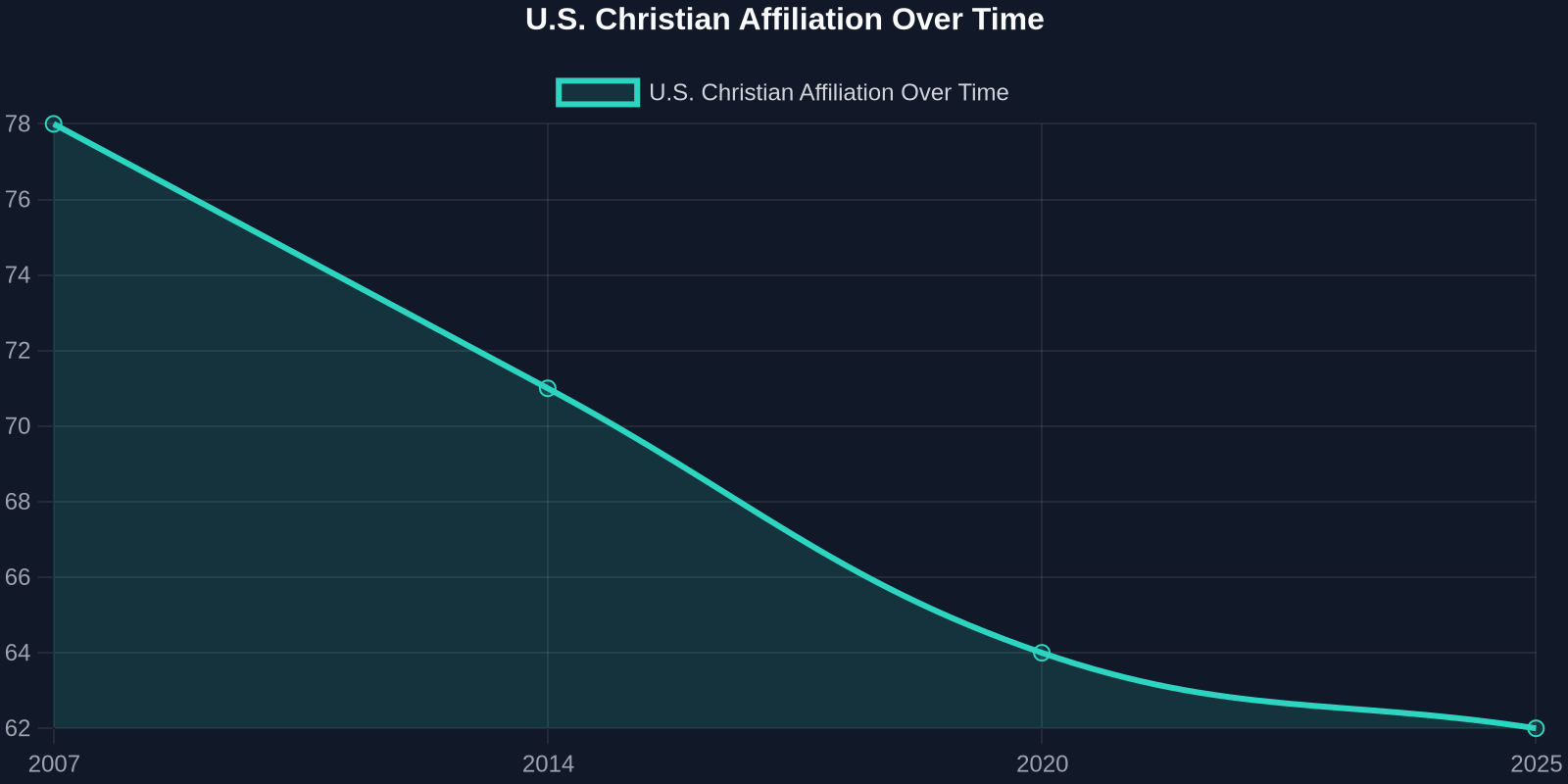
Gallup’s latest findings confirm a long–observed trend: religious engagement has declined over the past several decades. But the new twist is that it now appears to be holding steady at these lower levels.
Pew Research Center’s 2025 Religious Landscape Study found that 62% of Americans identify as Christian, while about 29% are religiously unaffiliated. Those numbers are little changed from recent years. The steep declines of the early 2000s have slowed significantly.
For people of faith, this is not a setback, it is an invitation. The cultural props that once propped up church attendance have been removed. Yet the core of the Christian life remains unchanged: a personal, living relationship with God through Jesus Christ. As the Psalmist wrote, “I have set the LORD always before me: because he is at my right hand, I shall not be moved” (Psalm 16:8).
Satisfaction Amidst a Shifting Culture
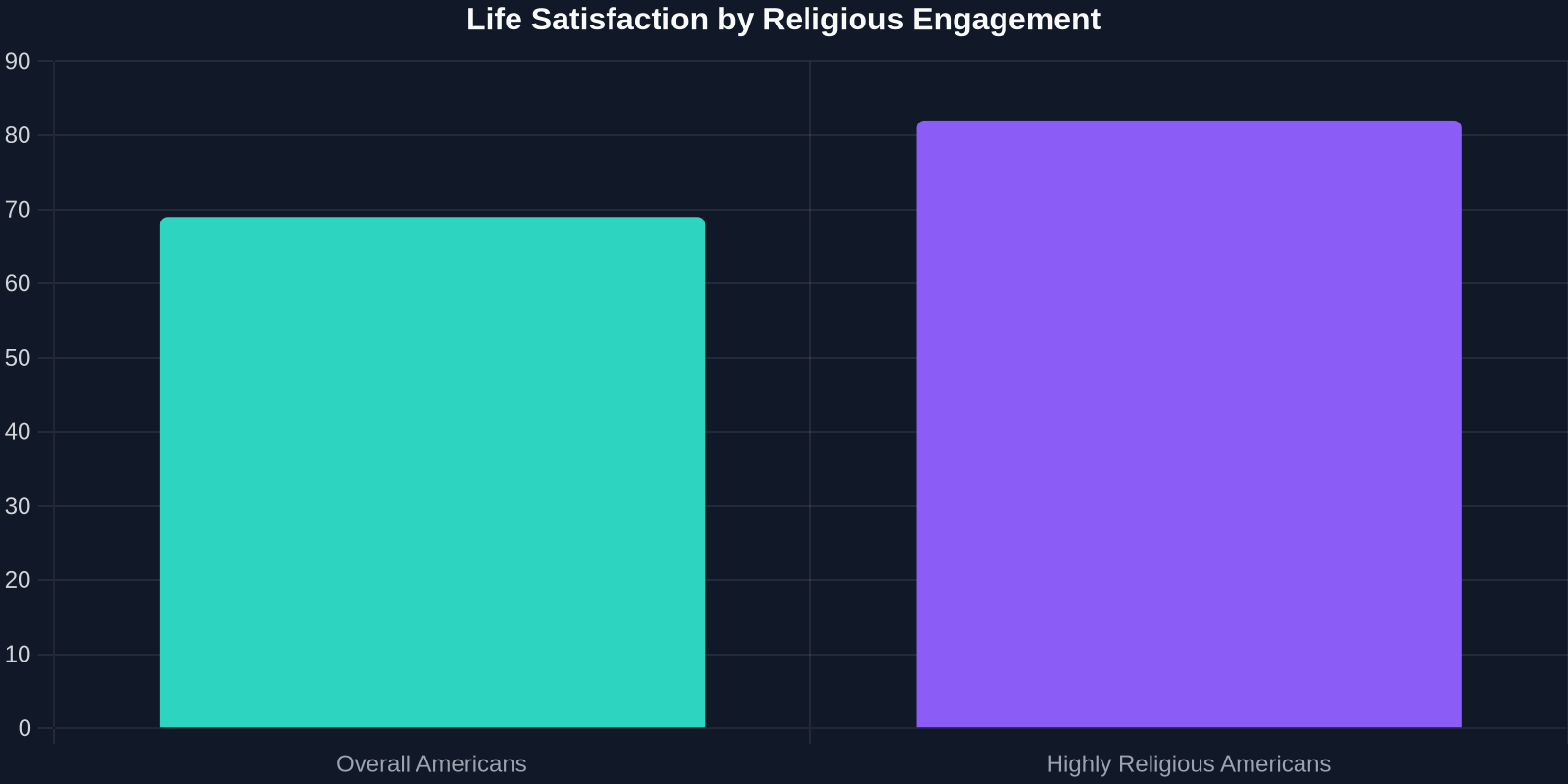
One of the most striking parts of the Gallup report is not about numbers in the pews, but about the human heart. “Highly religious Americans were more satisfied than Americans overall, on these same measures.”

While overall life satisfaction and feelings of safety have fluctuated, 69% of Americans said they felt safe in 2025, down from a 2024 high but still above historic lows, those who are deeply engaged in their faith consistently report a greater sense of well–being.
This aligns with the wisdom of Scripture: “But godliness with contentment is great gain” (1 Timothy 6:6). The high–tech, high–anxiety rhythms of modern life can leave anyone drained. A faith that connects you daily to the eternal provides a perspective that goes beyond the next notification.
“Be not weary in well doing: for in due season we shall reap, if we faint not.”, Galatians 6:9
What the Plateau Means for Your Walk with God
When the polls no longer assume that everyone is a Christian, each of us must decide for ourselves: will I follow Jesus intentionally today?
This question is not new. The early church thrived when it was a minority immersed in a secular empire. They did not rely on cultural momentum; they relied on the Holy Spirit and on daily, life–giving rhythms.
Consider the example of Daniel, who lived in a culture that did not share his faith. “But Daniel purposed in his heart that he would not defile himself…” (Daniel 1:8). He made up his mind ahead of time, and then he lived it out.
Three Anchors for a Life of Faith
How can we live as a “faithful remnant” in a busy, distracted age? The answer is not to add more noise to an already noisy life. It is to return to the simple, ancient practices Jesus himself modeled.

1. Morning Stillness
Before the day starts shouting, let God speak. Jesus often withdrew to a solitary place to pray (Mark 1:35). For Sarah from our opening story, that means not picking up her phone for the world until she has first read a verse of Scripture. This is exactly how the widget Vesper works: it puts one King James Version verse on the Lock Screen each day, so the first thing you see is God’s Word, not the day’s agenda.
2. Weekly Worship
Hebrews 10:25 urges us not to forsake “the assembling of ourselves together.” In an age of livestreams and on–demand everything, showing up in person matters. It weaves you into a community of support, correction, and encouragement.
3. Daily Remembrance
In the Old Testament, God’s people built altars of stones as reminders of what God had done (Joshua 4:6–7). Today, a verse on your phone screen, a sticky note on your mirror, or a Scripture card in your pocket can serve the same purpose. “Thy word have I hid in mine heart, that I might not sin against thee” (Psalm 119:11).
| Habit | Then (1950s) | Now |
|---|---|---|
| First thing in the morning | Family prayer or radio sermon | A KJV verse on the Lock Screen |
| Wednesday evening | Midweek church service | 5–minute Scripture podcast |
| Sabbath day | All–day quiet (blue laws) | Intentional 24–hour tech rest |
A Generational Challenge and Hope
Young adults today face a world of immense pressure. Another statistic, this one from a national education snapshot, reminds us of the stakes: only 40 percent of 25– to 29–year–old Americans have earned a high school diploma.
Whether or not you have a diploma, the stresses of early adulthood, financial instability, loneliness, career anxiety, are real. Faith has always been a place where the weary find rest. Jesus’ invitation is as open today as it was two thousand years ago: “Come unto me, all ye that labour and are heavy laden, and I will give you rest” (Matthew 11:28).
Young men and women are not rejecting God; many are simply waiting for someone to show them what an authentic, Scripture–rooted life looks like. Your quiet, consistent witness may be the most powerful sermon anyone ever hears.
Measuring What Matters: The Joy of the Highly Religious
The satisfaction gap mentioned in the Gallup report is not a blip. Year after year, people of deep faith report a stronger sense of purpose and wellbeing.

Why? Because a life oriented around God’s presence is a life that finds meaning even in suffering. The Apostle Paul, writing from a prison cell, could honestly say, “I have learned, in whatsoever state I am, therewith to be content” (Philippians 4:11).
A Small Habit to Try This Week
You don’t have to overhaul your entire life to deepen your faith. Try one small change: place a verse of Scripture where you will see it first thing in the morning. You might write it on a notecard, tape it to your bathroom mirror, or let a simple widget deliver it to your phone’s Lock Screen.
As you begin this habit, pray this ancient prayer from the Psalms: “Open thou mine eyes, that I may behold wondrous things out of thy law” (Psalm 119:18).
When faith is no longer the default, it must become intentional. And when it is intentional, it can become stronger than ever.
“And ye shall seek me, and find me, when ye shall search for me with all your heart.”, Jeremiah 29:13
In a world that often feels unmoored, let the daily bread of Scripture be the solid ground beneath your feet. You are not alone in this journey. The God who promised never to leave nor forsake you is the same yesterday, today, and forever. And the single verse you read tomorrow morning? It is his personal word to you.